
Theatrum Orbis Terrarum (Atlas of Abraham Ortelius)
The first atlas of history
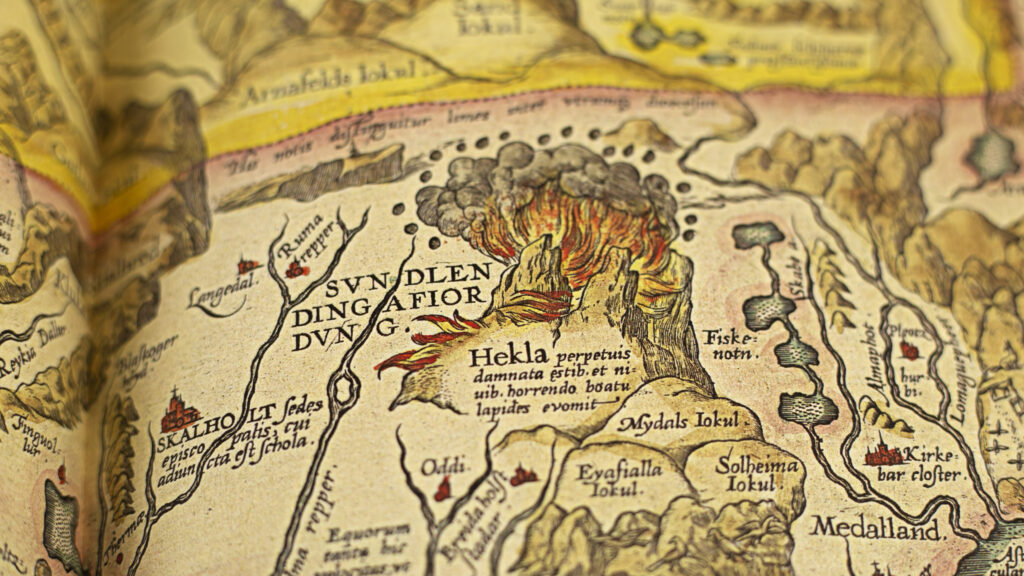
One of the first modern atlases
This atlas was crucial for the development of renaissance cartography by set standards as the orientation of the maps towards the north and the compilation in a single volume.
He compiled maps of several contemporary cartographers, providing a complete and accurate view of the geography of the time. In addition, he propagated geographical knowledge that laid the foundation for later explorations and expansions.
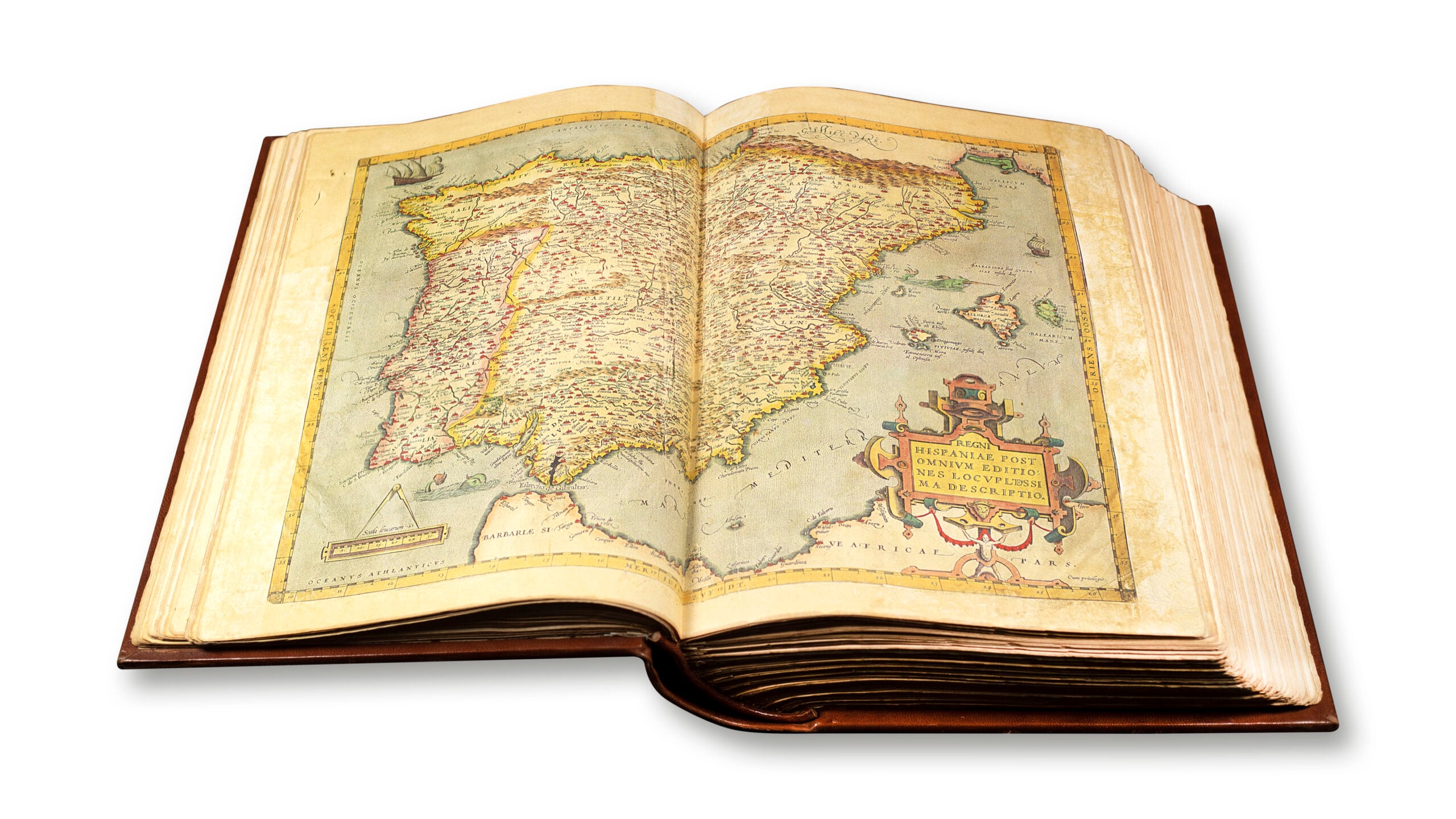
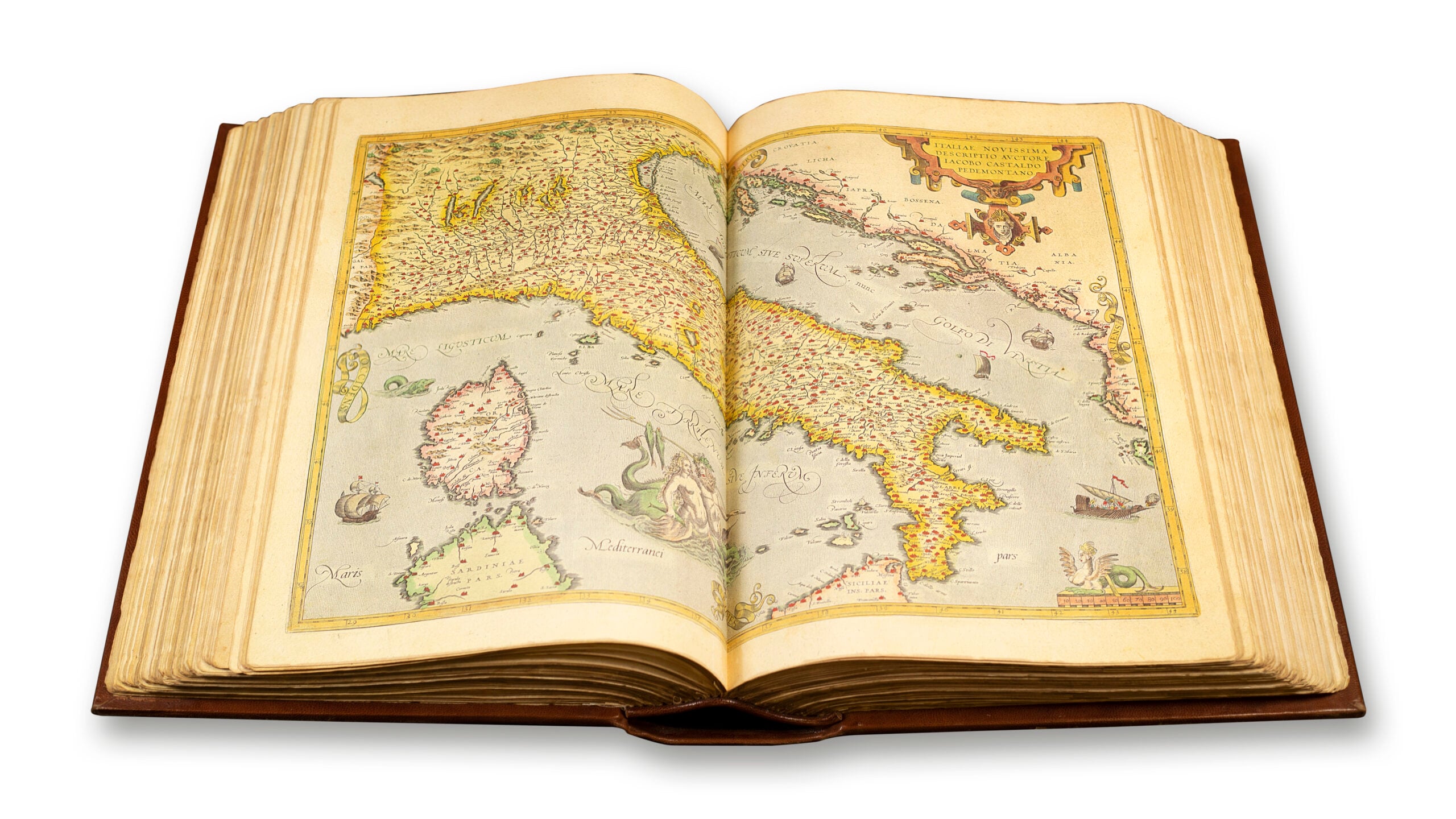
Abraham Ortelius and his ambitious project
Ortelius captured the known world in a single work, being the first systematic attempt to assemble maps in an organized and coherent way, including aspects such as history, gastronomy, crafts and commerce.
Artisan hands: the essence of each volume
The first step in our process is the skin nut, where we cut with precision to achieve a texture that is thinner, more flexible and manageable. We use a special shoemaker's machine and then, with skilled craftsmanship, we employ the chifla, The exclusive tool that gives its name to this technique is used to treat the most delicate areas, ensuring a smooth and elegant finish.
The result is a masterpiece that radiates luxury and refinement.
The centuries-old technique of scartivana
Each of the almost 700 pages is bound by our master craftsmen using the handcrafted technique of the rose hip, which provides a unmatched authenticity and feel.
After fixing each booklet on the printing press, it is sewn by hand, sheet by sheet, with 9 stitches on the spine, guaranteeing the durability and a sublime reading experience.
The pages are precisely assembled by means of the rose hip,a delicate strip of paper that assures a perfect and robust union. In turn, each of the 16 booklets are sewn together by the escartivana, to give consistency to the work.
This process is vital in facsimiles of cartography, allows you to fully enjoy the nearly 170 maps it contains, without losing details.
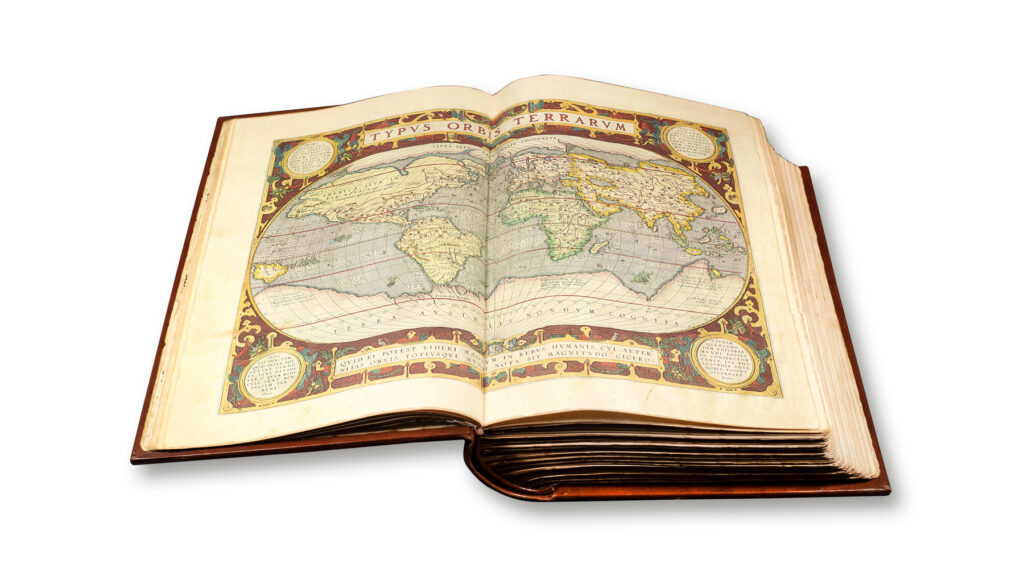
A celebration of craftsmanship and history
After stitching and gluing, the next step is the rounded spine, which requires precision and skill to achieve a perfect finish. This step is especially vital in the creation of cartography facsimiles, where every detail matters.
The curvature of the spine makes it easier for the pages to are perfectly seated when the book is closed, protecting them from wear and tear and the deformation. In addition, it provides a more robust and resistant surface.
The only 1900 Kraus in Spain
The goatskin covers are subjected to a thermal stamping with a machine Kraus of 1900, unique in Spain using the technique of embossing.
This process consists of printing the skin to 90ºC dry and high pressure, The book has a very fine baroque stamping, enhanced by five knots on the spine and crowned by an elegant gilt title in gilt.
Just as Ortelius tackled his atlas with enthusiasm and meticulousness, we have worked hard to achieve a perfect reproduction of the same.
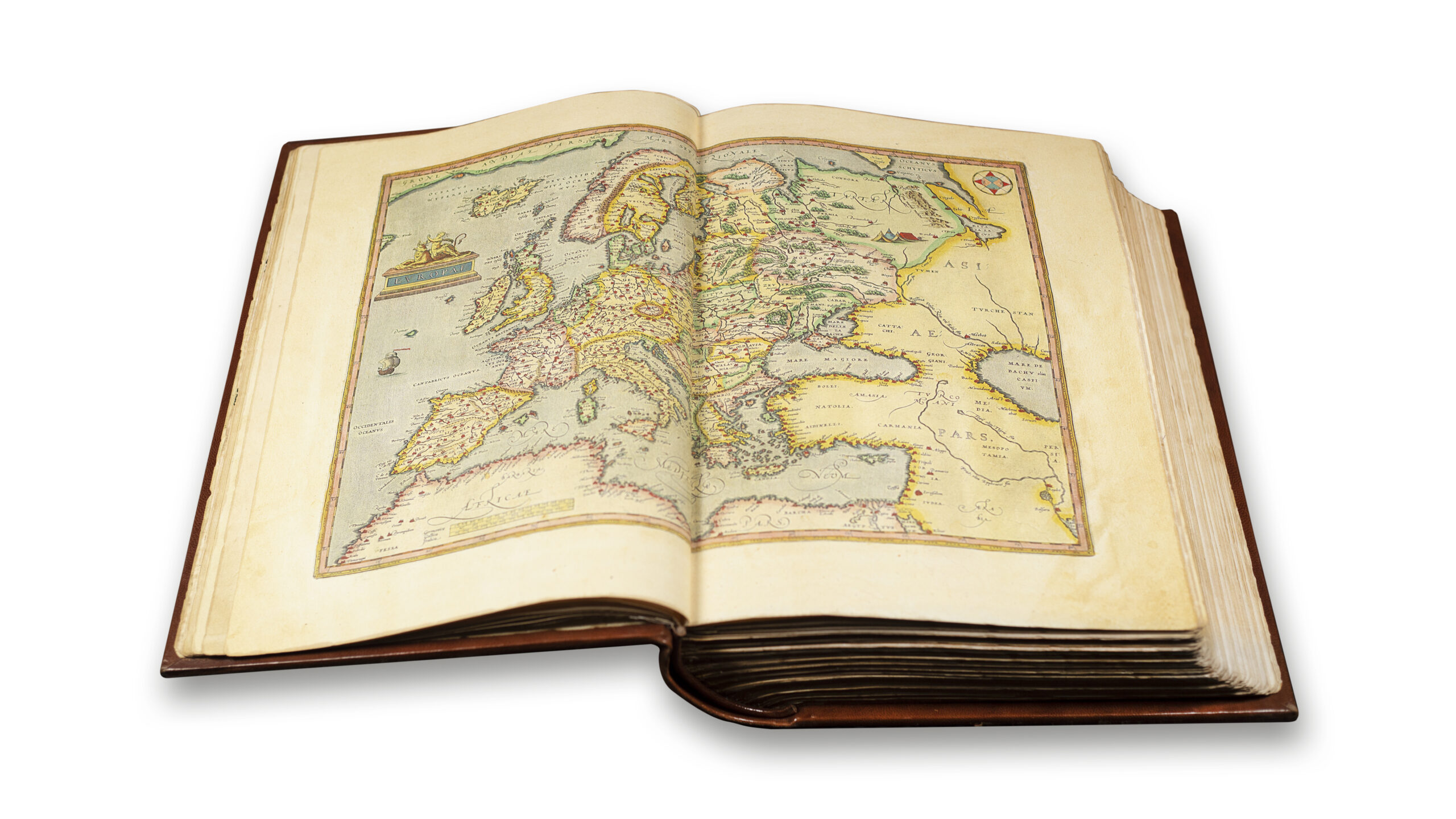
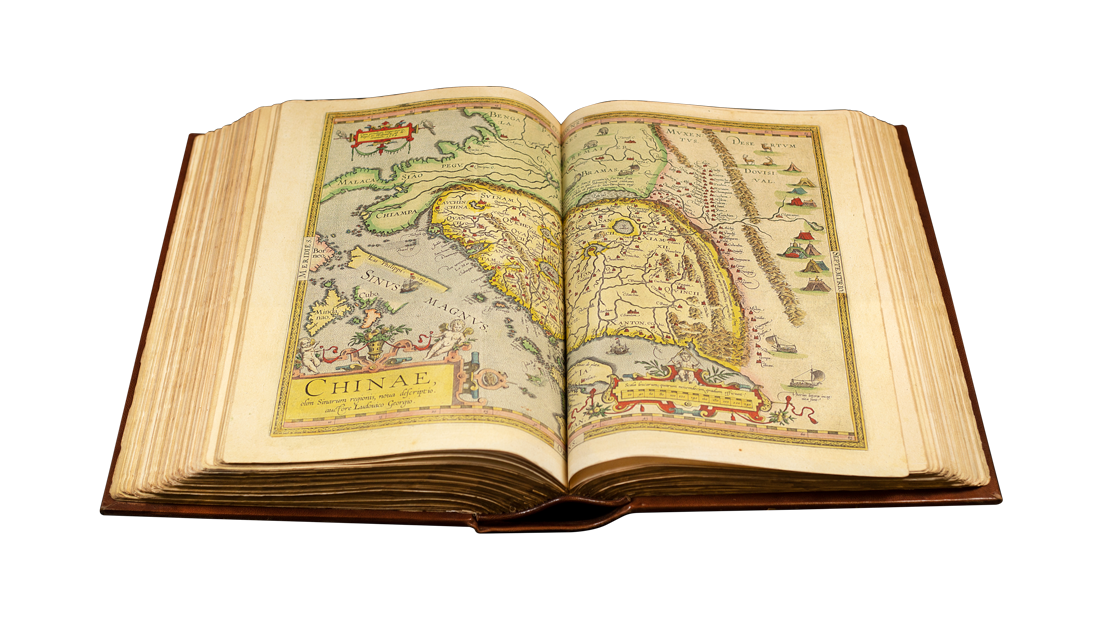
Transport yourself to the 16th century
The selected bracket emulates the rough textureThe original paper, while the complex process of print uses at least eight shades to ensure a chromatic reproduction faithful to the pigments of the work.
The first complete facsimile edition
It is presented in a exquisite ribbon book-keeper, realized by hand with the reproduction of the cover of the Atlas next to the coat of arms of Felipe VI, King of Spain.
The luxurious studio, a work of art in its own right, is in charge of professor emeritus (and a great bibliophile as well), Agustin Hernando Rica, will delight you with his precise explanations of the atlas and his profusely illustrated commentaries with nearly 200 images.
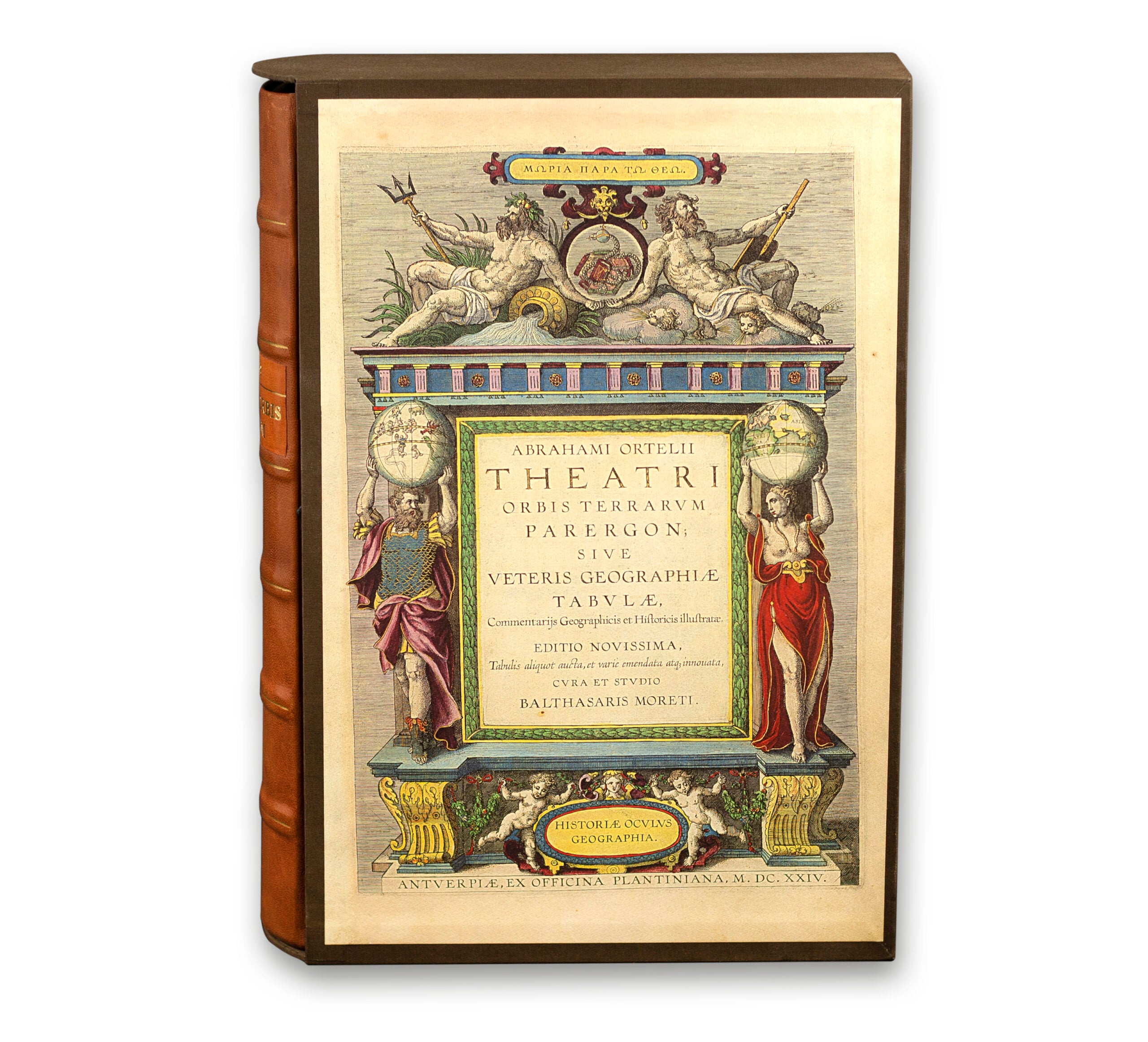
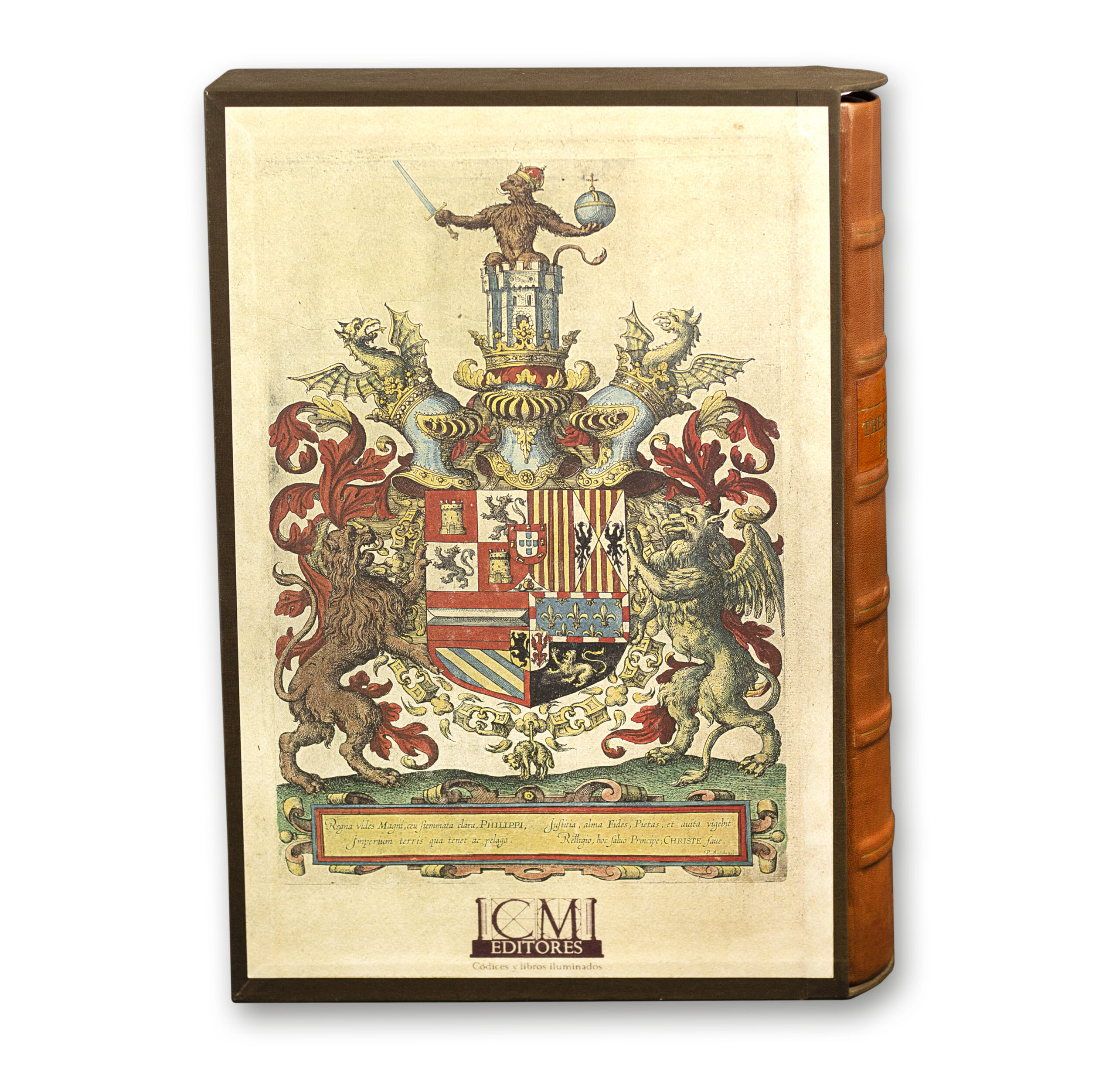
ONLY 375 COPIES
It is an exclusive piece for only a few, this is an edition limited, numbered and notarized.
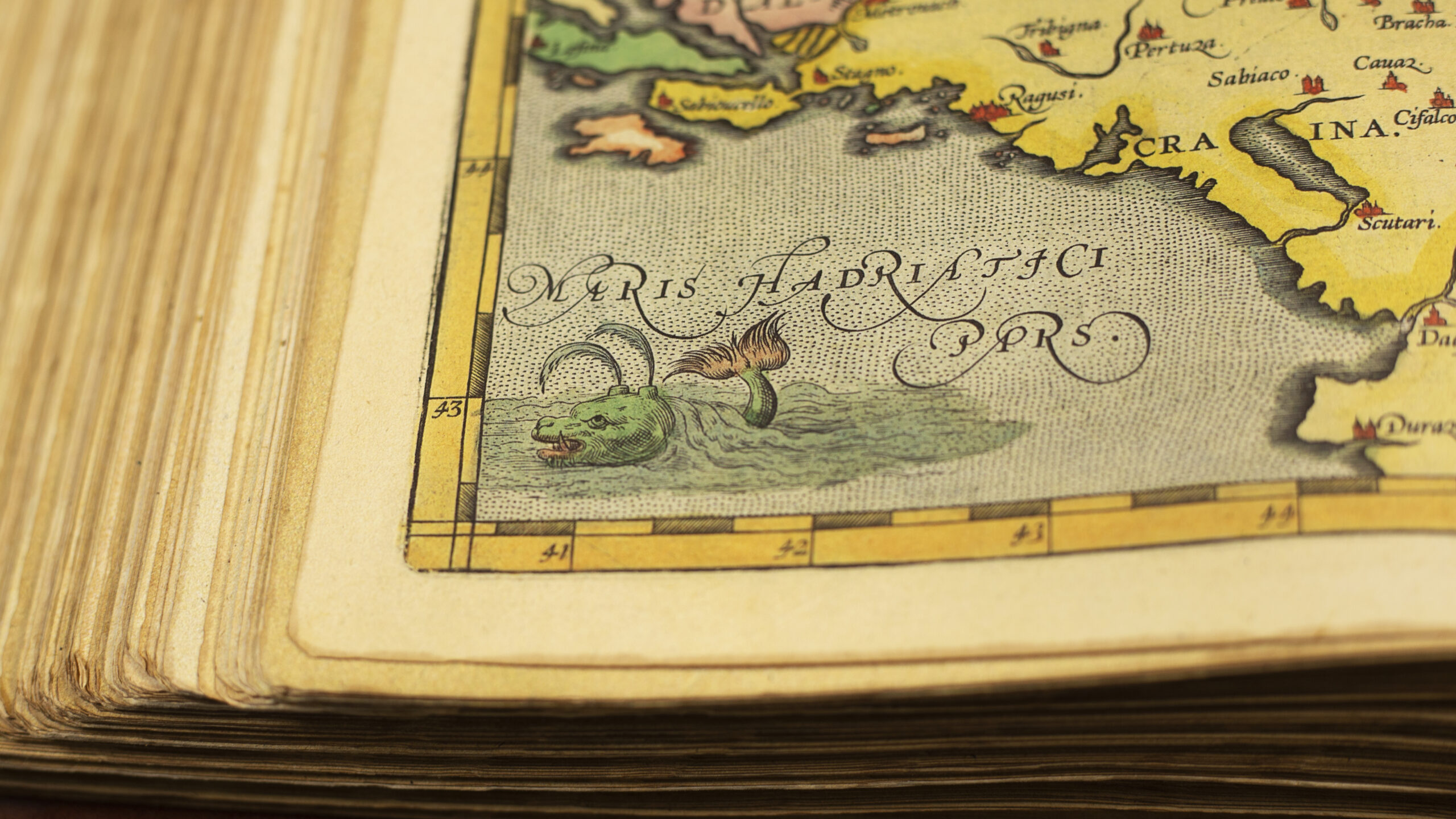
- The Atlas and Paraegon were published at Antwerp, Belgium.
- The Atlas was published in 1612 at Spanish former, while the Paraegon was published in 1624 at Latin.
- Contains a total of 170 maps, the majority double-page spread y hand-colored.
- The volume has 672 pages and measures 44 x 24 cm.
- The original is preserved in the Historical Library of the University of Salamanca with the symbol BG/5203.
- The print run was 375 copies numbered in Arabic before a notary and 25 in Roman numerals.
 Español
  English
  Português
  Français