
The most valuable Books of Hours of the Iberian Peninsula
Montserrat Collection
The treasure of the Montserrat Abbey

Book of Hours of Hippolyta of Aragon-Sforza
Enlightened by the masters highlights of the golden age
An exquisite and limited reproduction, handcrafted by master bookbinders for exclusive collectors.
The Library of the Abbey of Montserrat houses three of the most exceptional Books of Hours of the Middle Ages.
Book of Hours of Munich-Montserrat

It is a manuscript of the XVI century, emerges from a period of artistic and cultural splendor. Originally preserved in the emblematic Abbey of Montserrat, Barcelona, Barcelona, represents a invaluable testimony of the rich monastic heritage and cultural heritage of the region.
Some of its leaves have been torn off and are found in the Bayerische Staatsbibliothek of Munich and the Paul Getty Library.
Jewel of medieval illumination
It has 221 pages, with richly decorated full pages and floral details inhabited by hundreds of plants, adorned with gold capitular letters.
The gold plates that adorn the covers are exact reproductions of watermarks and stampings of the original bindings, very damaged by the passage of time.
Book of Hours of the Master of the Triumphs of Petrarch
Capture the unique essence of the Norman books. Illuminated in the 15th century, originally from Rouen, France. It is located in the Abbey of Montserrat and is known for its Norman style and its rich full-page illustrations. Kept in the Abbey of Montserrat, in its pages, the following are displayed sacred scenes such as the life of the Virgin Mary and Christ, together with evocative depictions of saints and the final judgment.
Reflection of medieval times
It has 130 folios, each adorned with full-page illustrations celebrating months of the year and zodiac signs, the manuscript is not only visually enchanting, but it is also offers a window into the perspective of the time.
The marginal decoration, rich in plant and animal motifs, The artistic richness of this a work that transcends the ordinary to enter into the sublime.

Book of Hours of Hippolyta of Aragon-Sforza
It is an outstanding example of the books of hours, which were christian prayer books for private use very popular among the nobility in the late Middle Ages. This manuscript was commissioned by Hipolita Maria Sforza, a member of the powerful Sforza family that ruled Milan.
It is the work of Jean Bourdichon, one of one of the most prestigious miniaturists in history and court painter to four kings of France. (Louis XI, Charles VIII, Louis XII and Francis I) and two queens (Charlotte of Savoy and Anne of Brittany).
Timeless mastery in its illuminations
Consists of 150 superbly illuminated folios, with 38 full page and the rest decorated with floral motifs that house hundreds of plants and a complete medieval bestiary of mythological animals.
It stands out for the careful use of light, the golden capital letters and the illumination of faces and clothing underline his virtuosity. His liturgical scenes and figures, The works of art, which oscillate between the real and the imaginary, reveal both the spiritual and the earthly. Saints, monarchs, fantastic creatures and symbols merge to create a vibrant and lively imaginary.
A historical jewel faithfully reproduced

Detail of the handcrafted process

Our process begins with the capture of images in full resolution, restored and cleaned to ensure a unsurpassed print quality, that reflects the colors and details. Each work is printed in Pergamenata Stucco by Fedrigoni.
The print is subjected to a strict quality control for the precise application of gold details during hot stamping. We make sure that the pigments match exactly the originals, with multiple checks in situ, in order to achieve a impressive color perfection.
Each sheet is hand sewn with hemp thread, This labor-intensive work ensures that the pages remain firmly bound for generations. This laborious work ensures that each book is a unique piece, reflecting the dedication and talent of our bookbinders.
The edges of the pages are traditional style browned using bread of gold, offering additional protection against wear and tear and an elegant shine that complements the internal illuminations.


Stamping of golden motifs imitates the cracking and wear of original golds, the product of the passage of time...
Covers, adorned with golden plates, are melted on three-dimensional molds. This finish provides a brilliant shine and ensures a unmatched durability.
The decorative motifs, recreated with the lost wax technique, an artisanal process that ensures that every detail is authentic and accurate, preserving the historical and artistic essence.
Elegant presentation to match this collection
It is presented in a exquisite varnished elm-root wood box, meticulously designed to protect this jewel and ensure its conservation impeccable throughout the generations.
Its interior, luxuriously upholstery in Italian Alcantara leather, offers a unparalleled experience of refinement. It is not only a container, but also a piece that elevates and enriches the value of its contents.
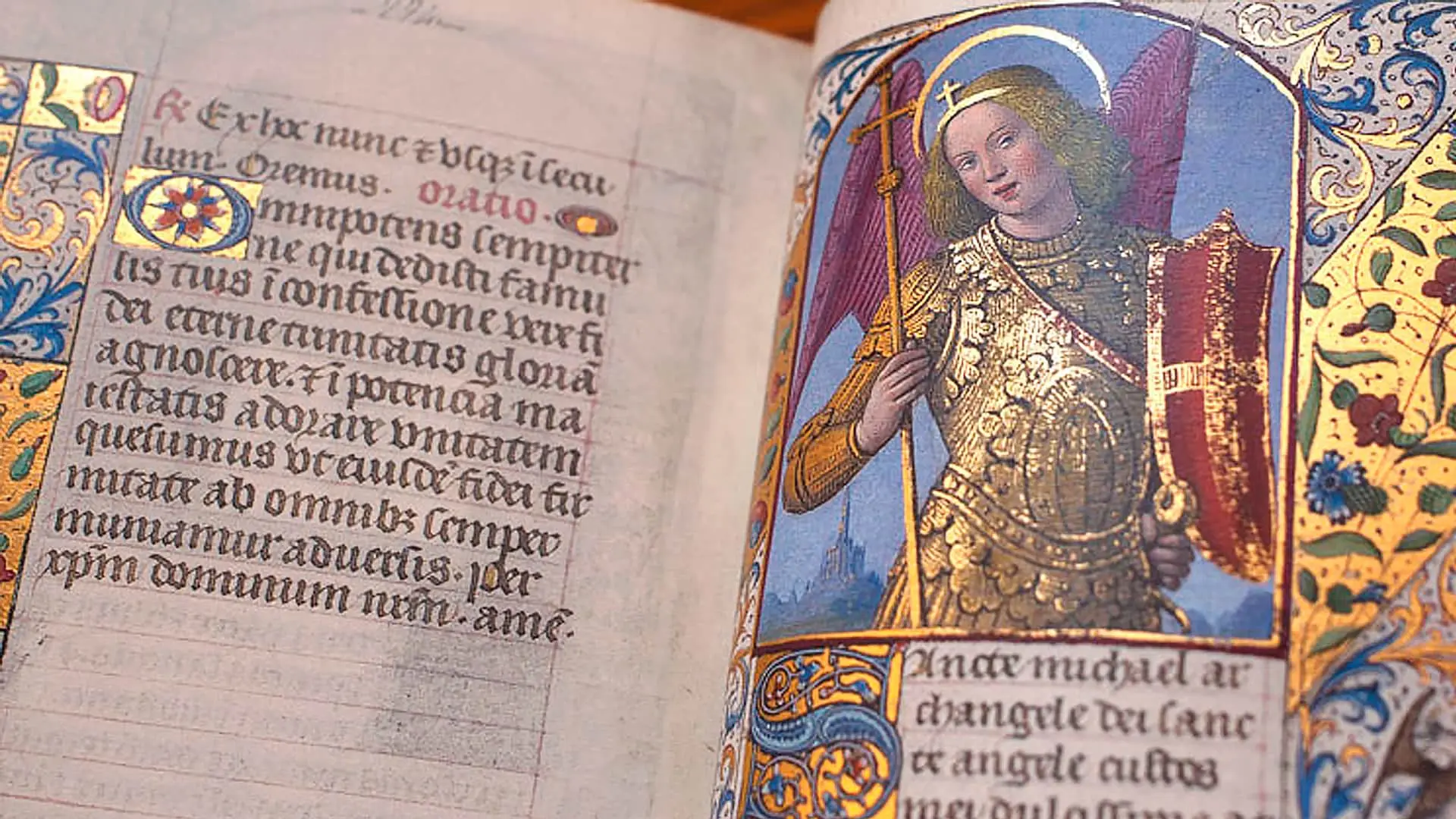
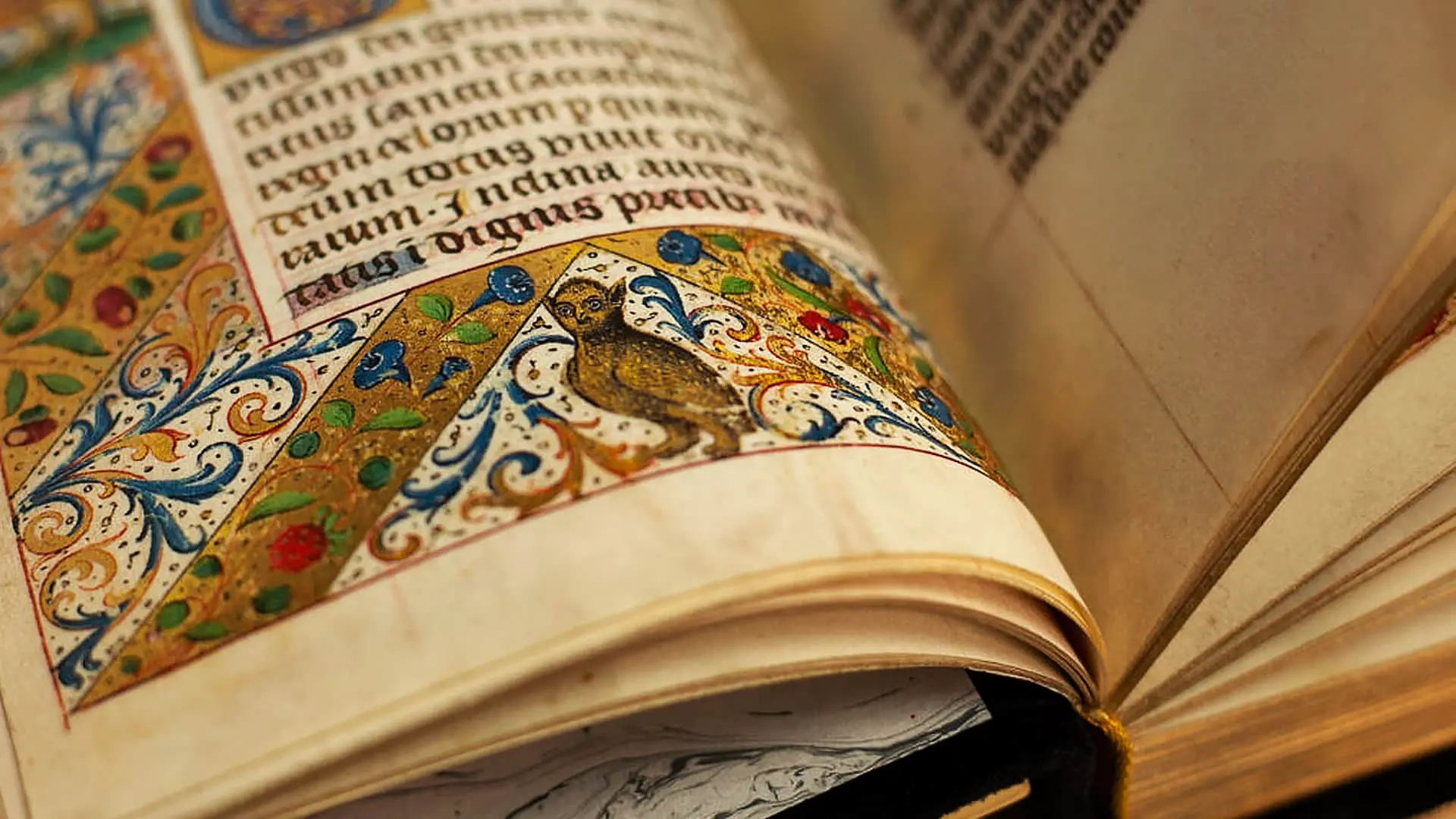
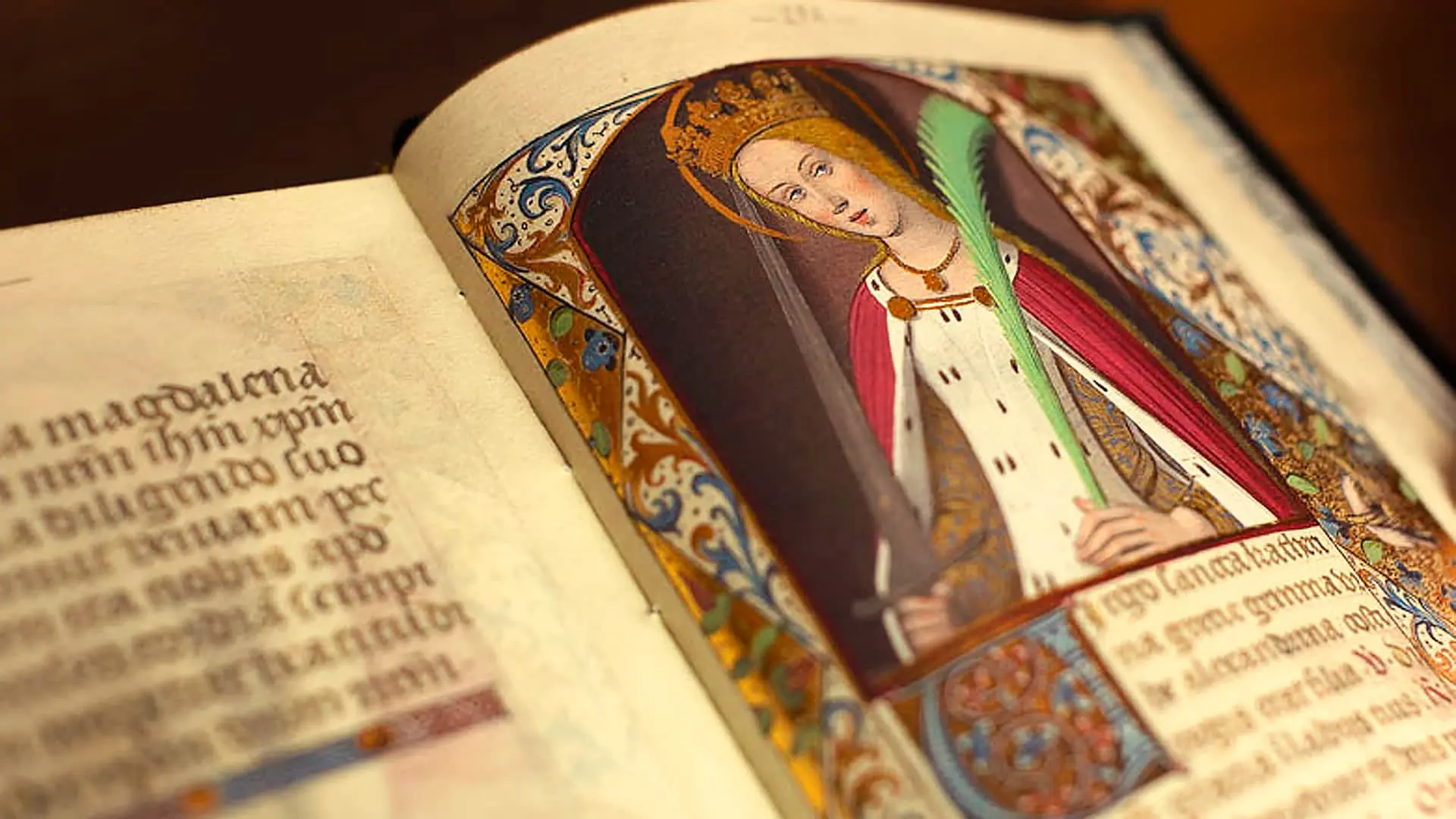
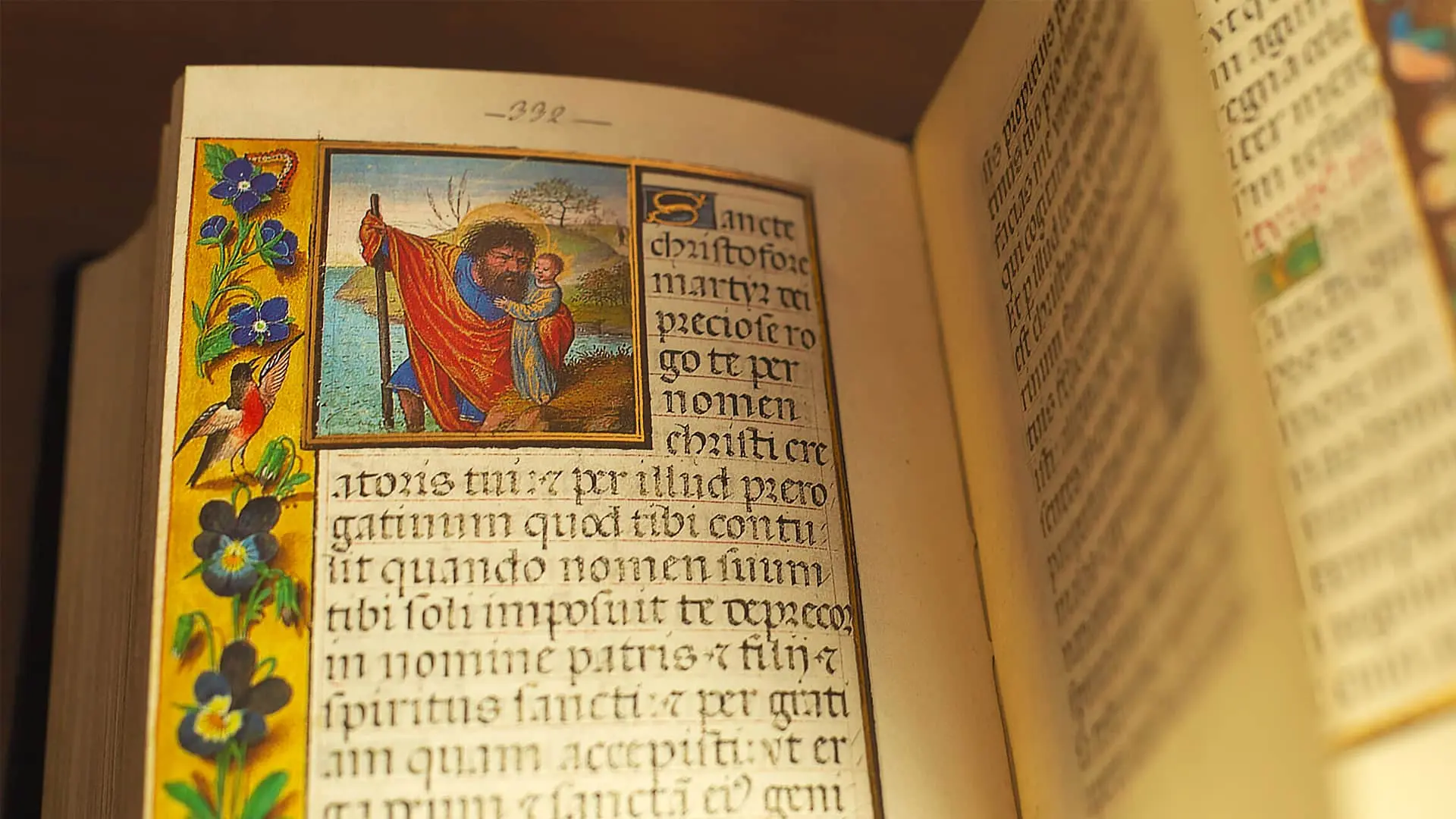
Detail of miniatures
Relevant data Montserrat Collection
Book of Hours of Munich-Montserrat
The author of this manuscript was Simon Bening, a 15th century Flemish painter and miniaturist.
It is distributed among several signatures: Ms. 53 of the Library of the Abbey of Montserrat, CLM 23638 of the Bayerische Staatsbibliothek in Munich (Calendar), and Ms. 3 of the Paul Getty Library in Los Angeles.
Originally from Ghent, Flanders, from the 16th century, this book measures 14 x 10 cm.
Book of Hours of Hippolyta of Aragon-Sforza
Originating in Paris, France, and dating from between the 15th and 16th centuries, it is a masterpiece of the renowned artist Jean Bourdichon.
Exquisite manuscript, with compact dimensions of 19.3 x 13 cm, it is a jewel of the collection of the Library of the Abbey of Montserrat, identified under the signature Ms. 66.
Book of Hours of the Master of the Triumphs of Petrarch
This anonymous manuscript originates from Rouen, France, and dates from the 15th century.
Its dimensions are 17.5 x 12.5 cm, making it compact and easy to handle. Most notable are its 130 pages, each adorned with full-page illustrations.
It is currently catalogued as Ms. 851 in the Library of the Abbey of Montserrat.
 Español
  English
  Português
  Français