An exclusive reproduction, handcrafted by master bookbinders for true connoisseurs of history.
The most important manuscripts of the universal genius
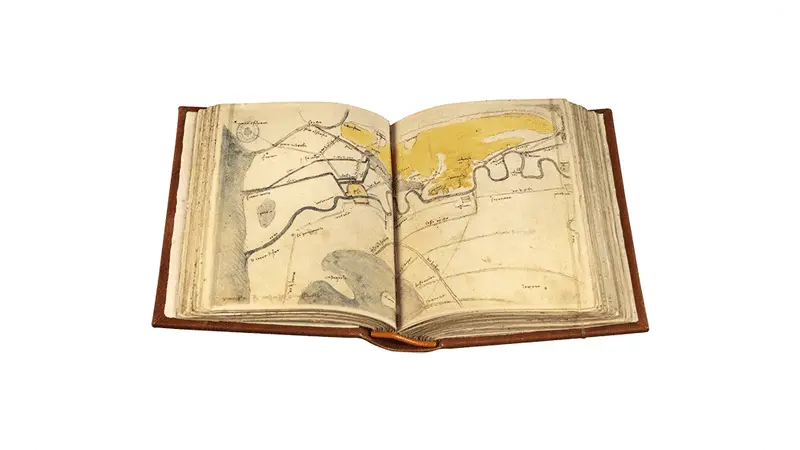
Discovered in the National Library of Spain in 1967, they contain a vast collection of writings and drawings ranging from engineering and mechanics to anatomy and geometry.
The work that allows us to understand the mind of the Renaissance genius.
Madrid Codex I
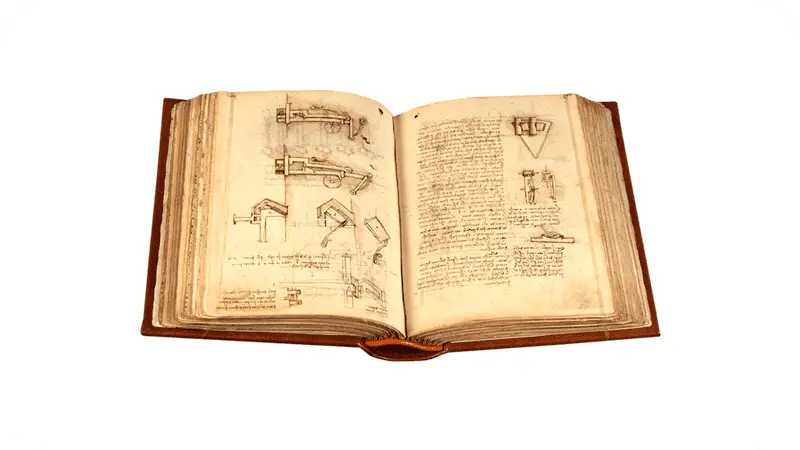
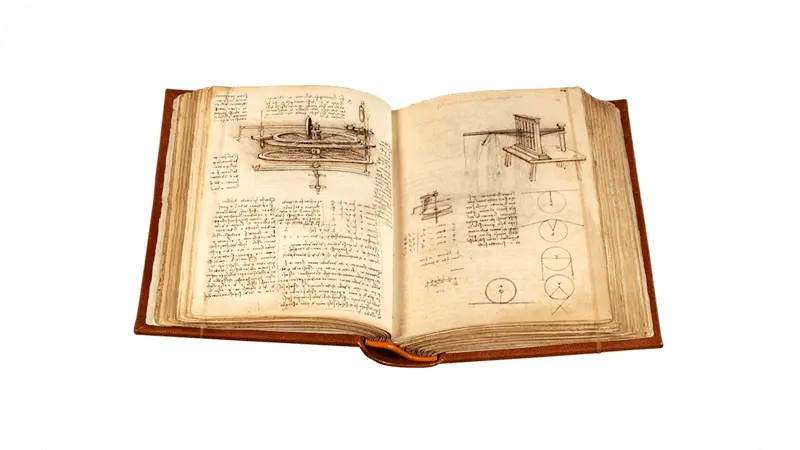
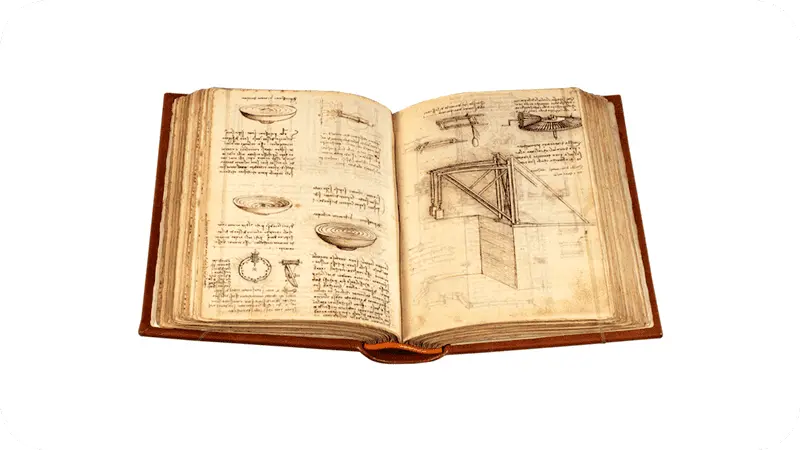
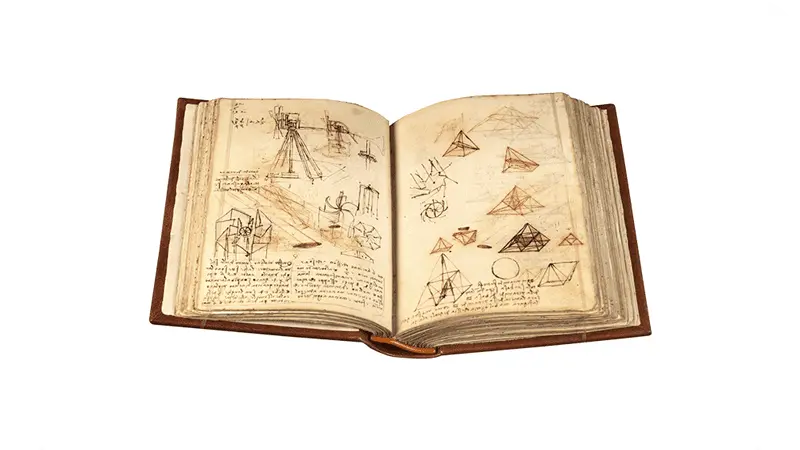
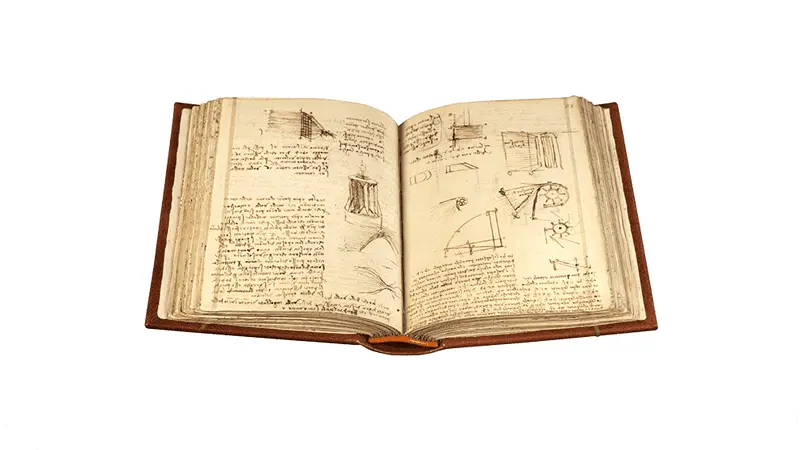
Created between 1493 and 1499, the Madrid I Codex (Ms. 8937) is a pioneering treatise on statics and mechanics in 12 booklets originally totaling 192 pages. You can visit written in dialectal Italian with Leonardo's famous «mirror handwriting». -a practical strategy for a left-handed person- and contains, among other things lever diagrams and stress studies, The artist himself consulted at the time, and also excerpts from books.
Madrid Codex II
Dated between 1503 and 1505, the Madrid II Codex (Ms. 8936) comprises 158 folios. dedicated to the construction and siege of fortifications, the applied geometry and, most especially, to the first artificial flight sketches anticipating his aerodynamic inventions. In addition to showing plans of siege machines, this volume provides more than 700 pages of drawings and notes that helped to solve old enigmas of Leonardo's work., significantly enriching the knowledge of his multidisciplinary mind.
The most faithful representation of this work
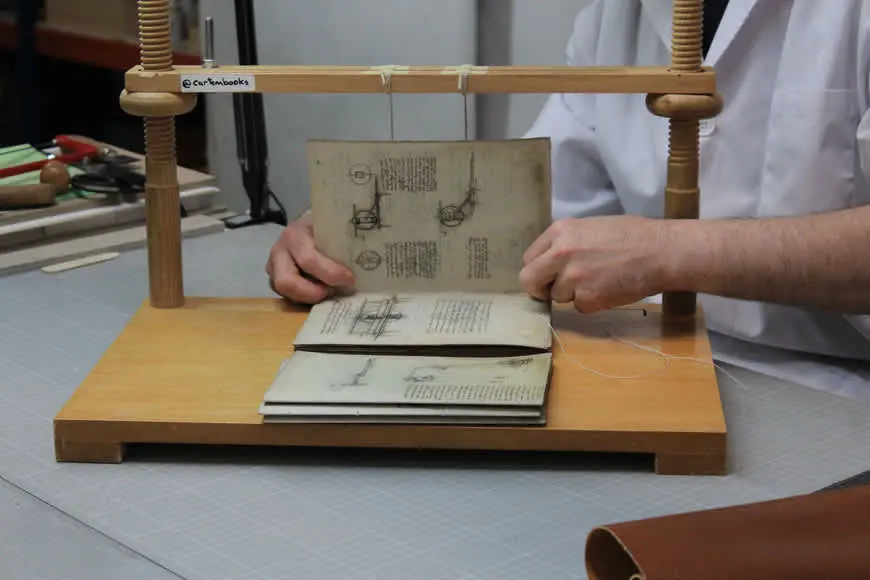
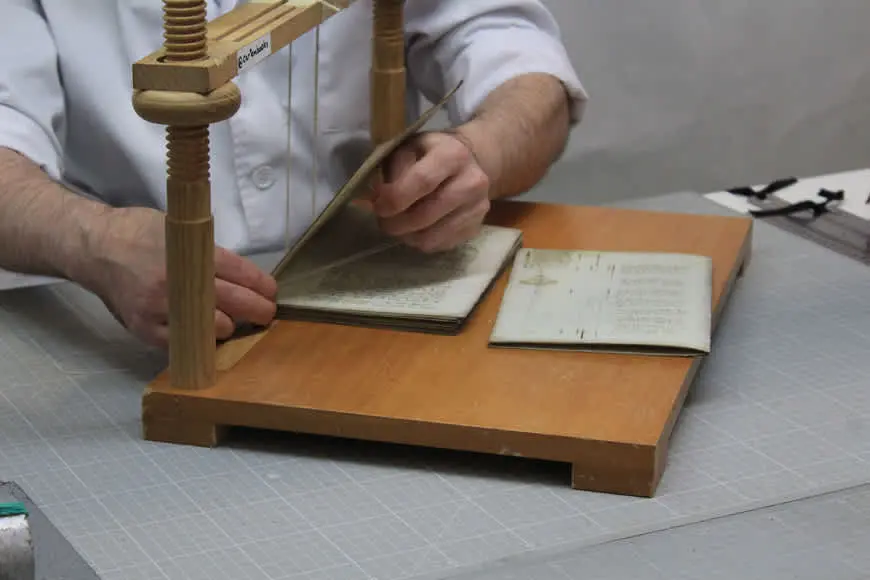
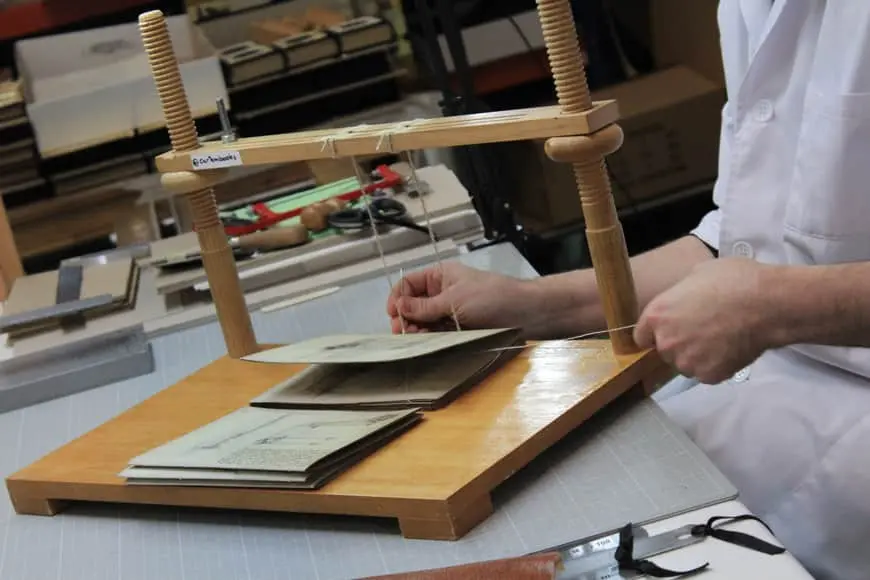
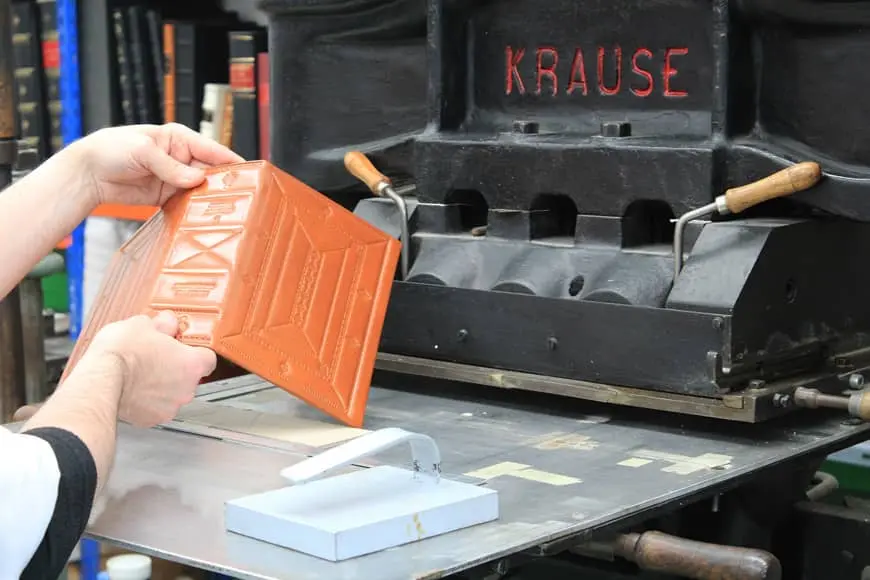
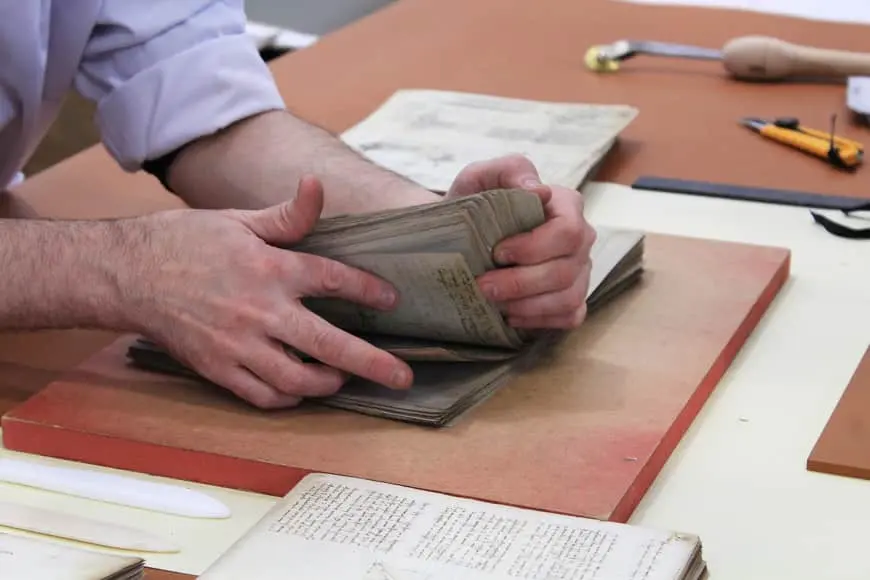
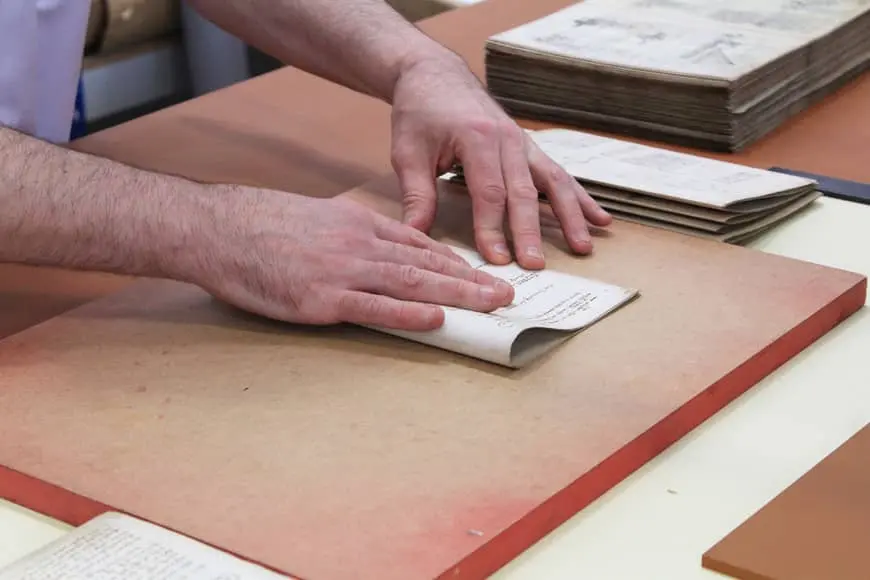
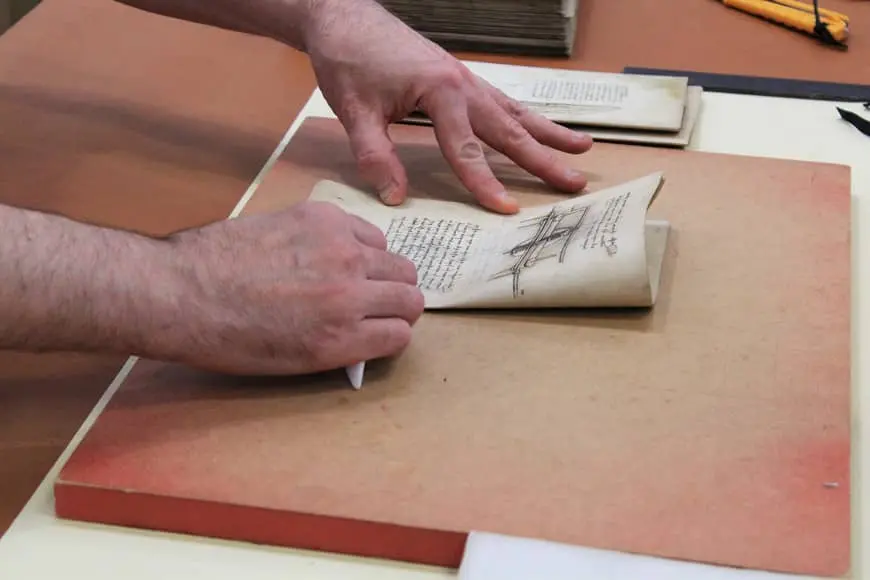
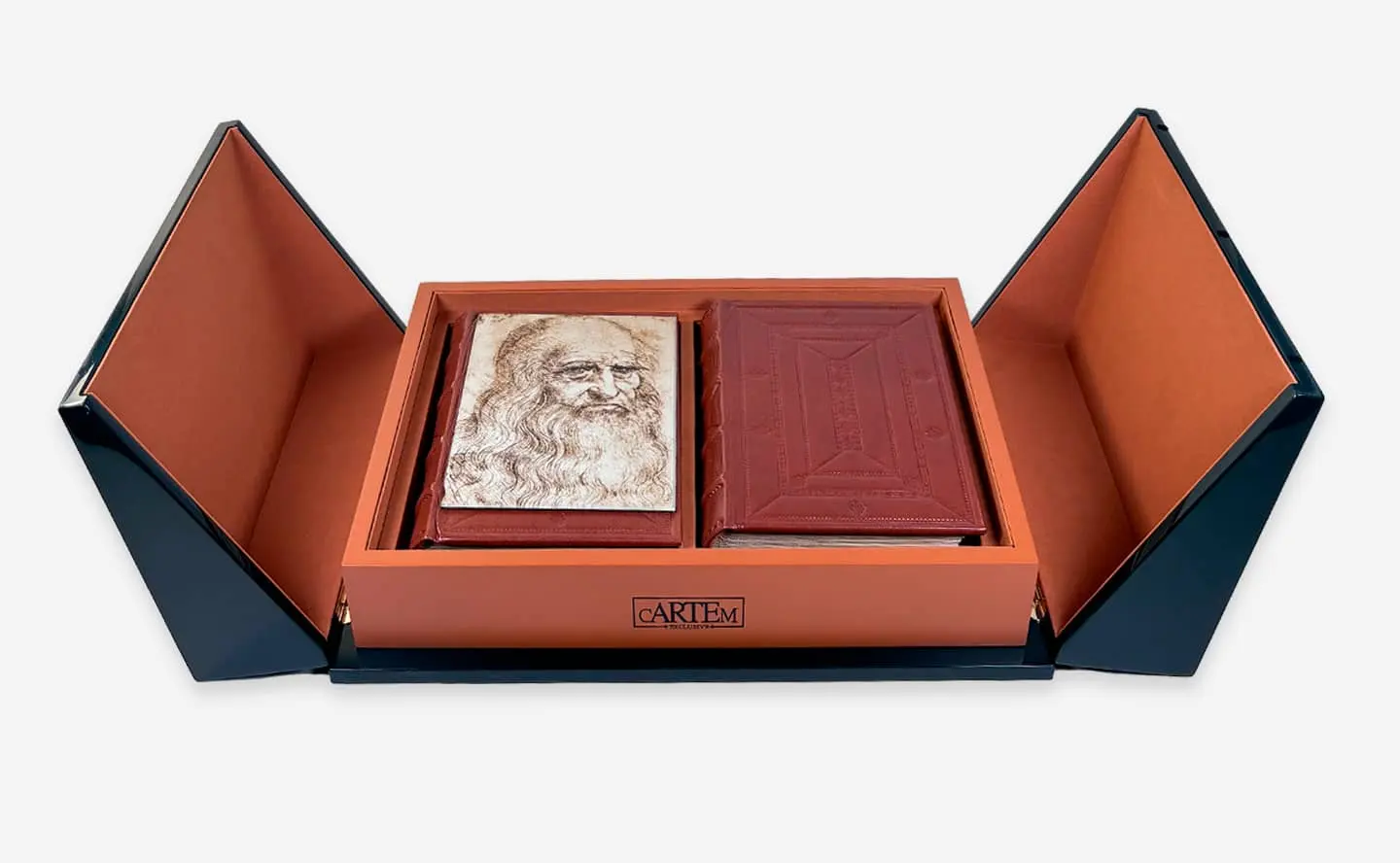
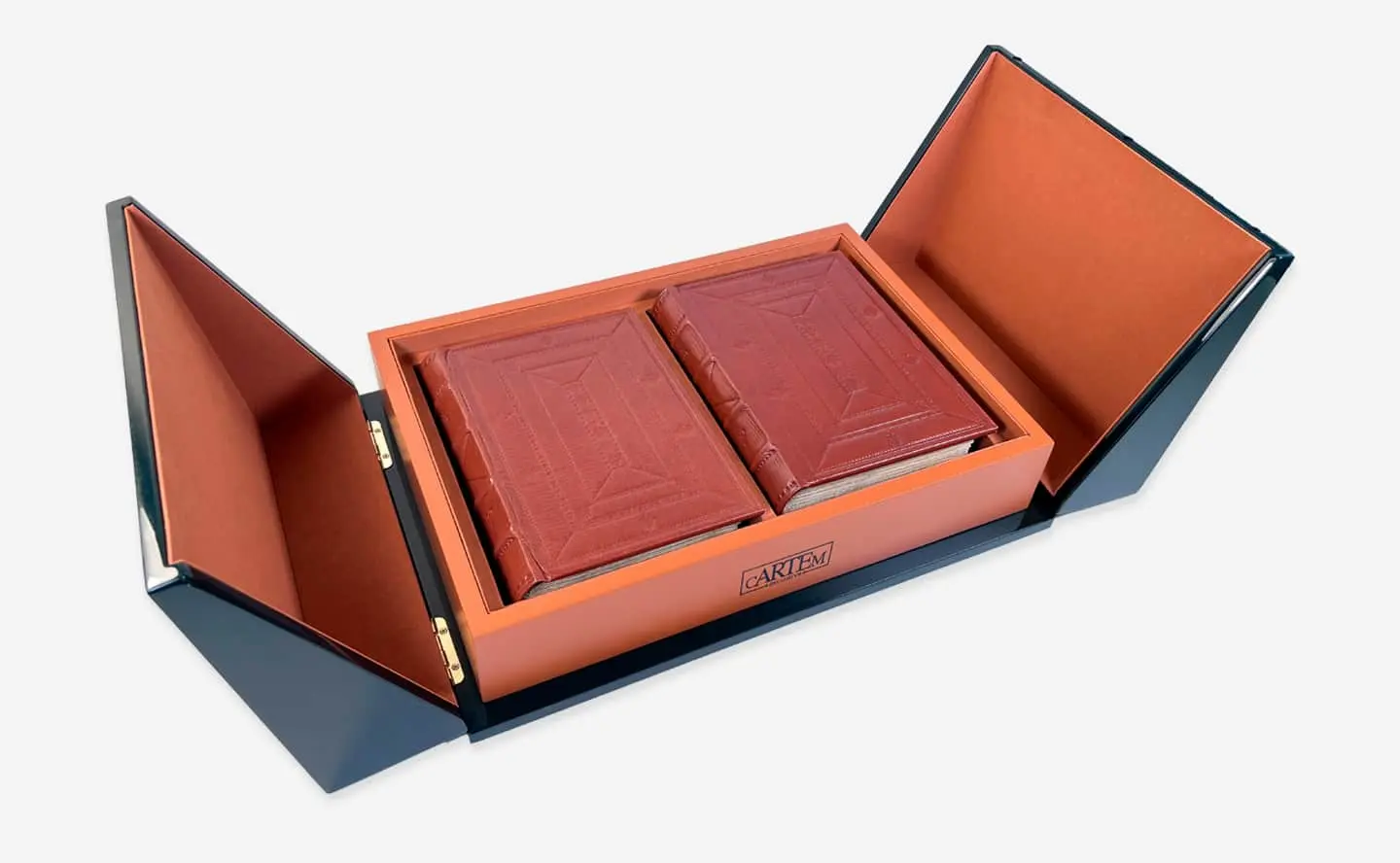
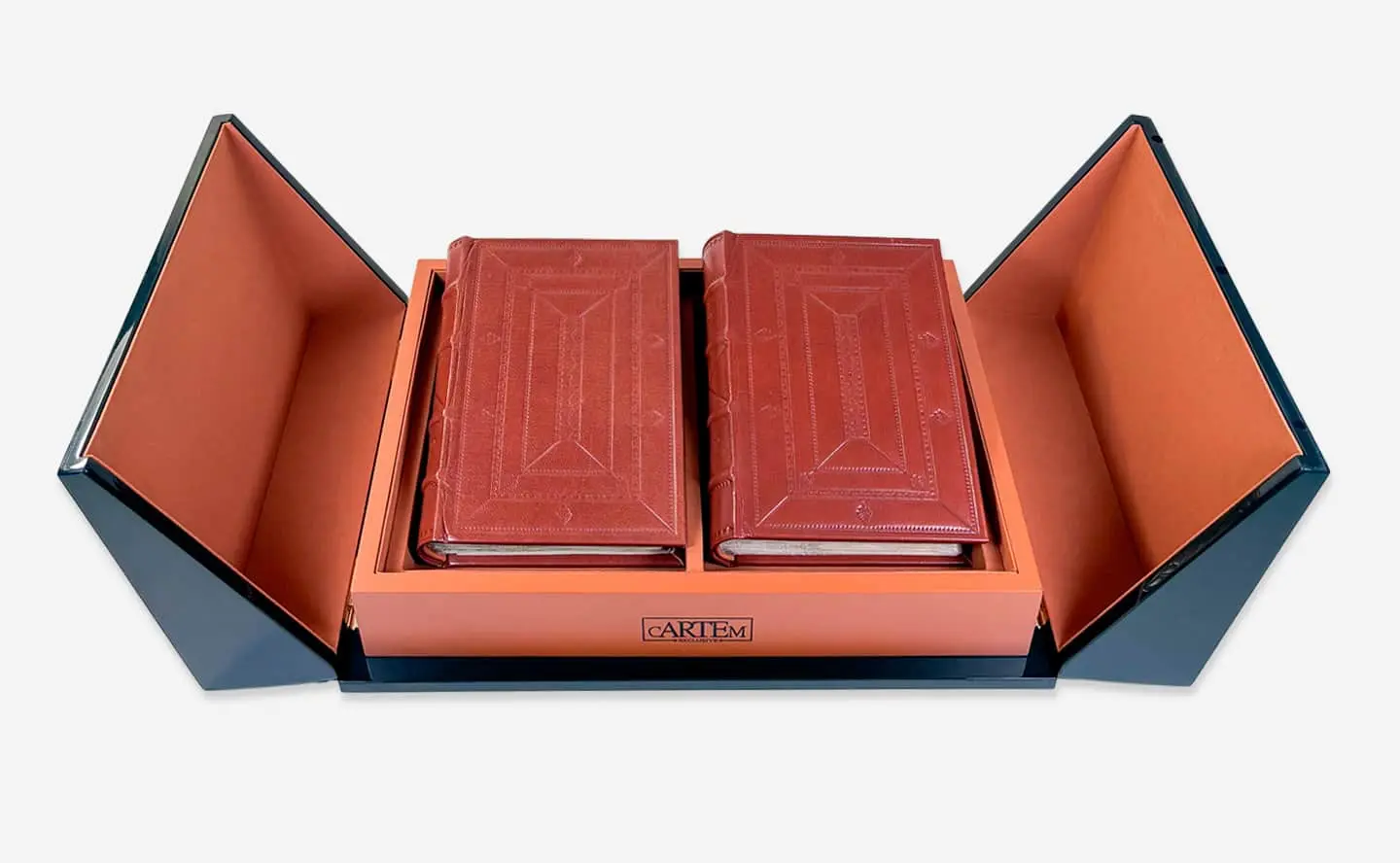
The binding has been handmade with hemp yarn on a traditional loom, technique that ensures the durability and authenticity of each specimen over the centuries.
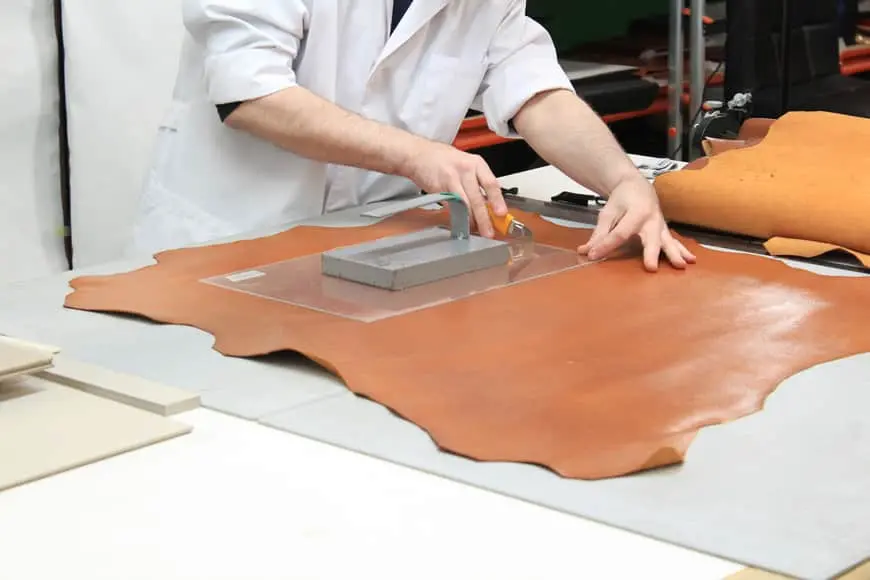
The goatskin, selected for its quality and resistance, has been meticulously selected for its worked by expert craftsmen. Each specimen is unique and carefully crafted down to the smallest detail, evoking the feel and look of the splendor of the Renaissance originals.
We have used advanced high-resolution scanning and colorimetric technology to meticulously capture every detail, color, and texture of the original manuscripts. The pages have been precisely laser-cut to ensure a perfect fit. flawless and accurate finish.
We have used Italian-made laid paper, The same type used by Da Vinci for his annotations and drawings. Each page has been individually aged and worn, faithfully reproducing its original state with technology which has not only recorded the tears and irregularities of the leaves, but has also authentically preserved the effects of the passage of time.
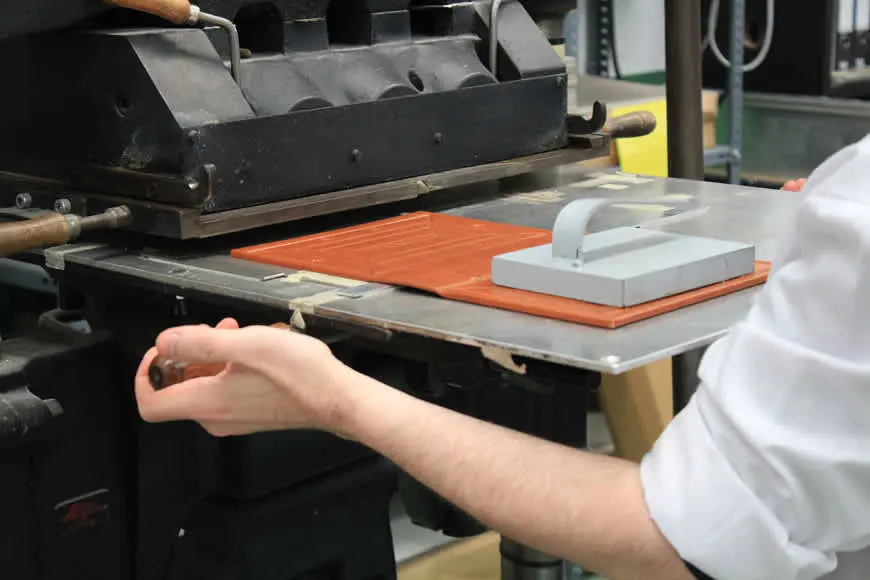
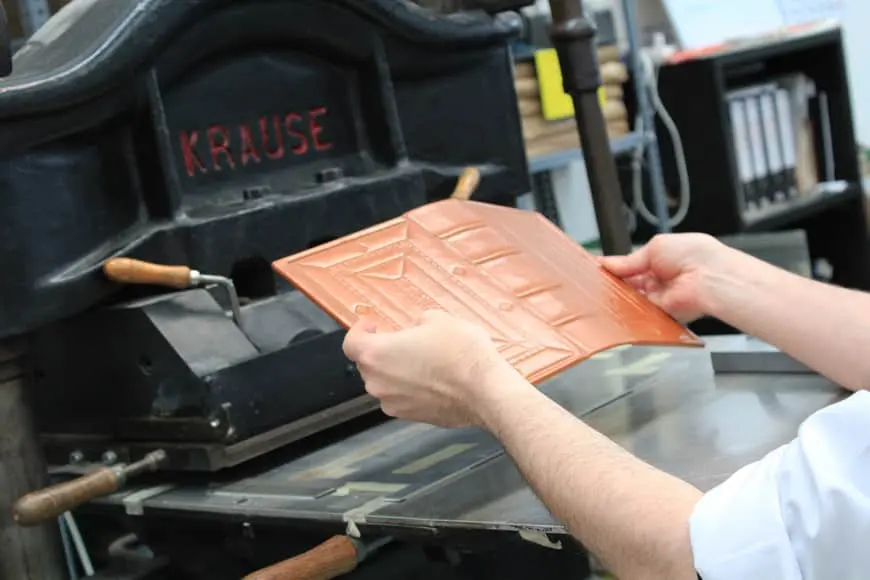
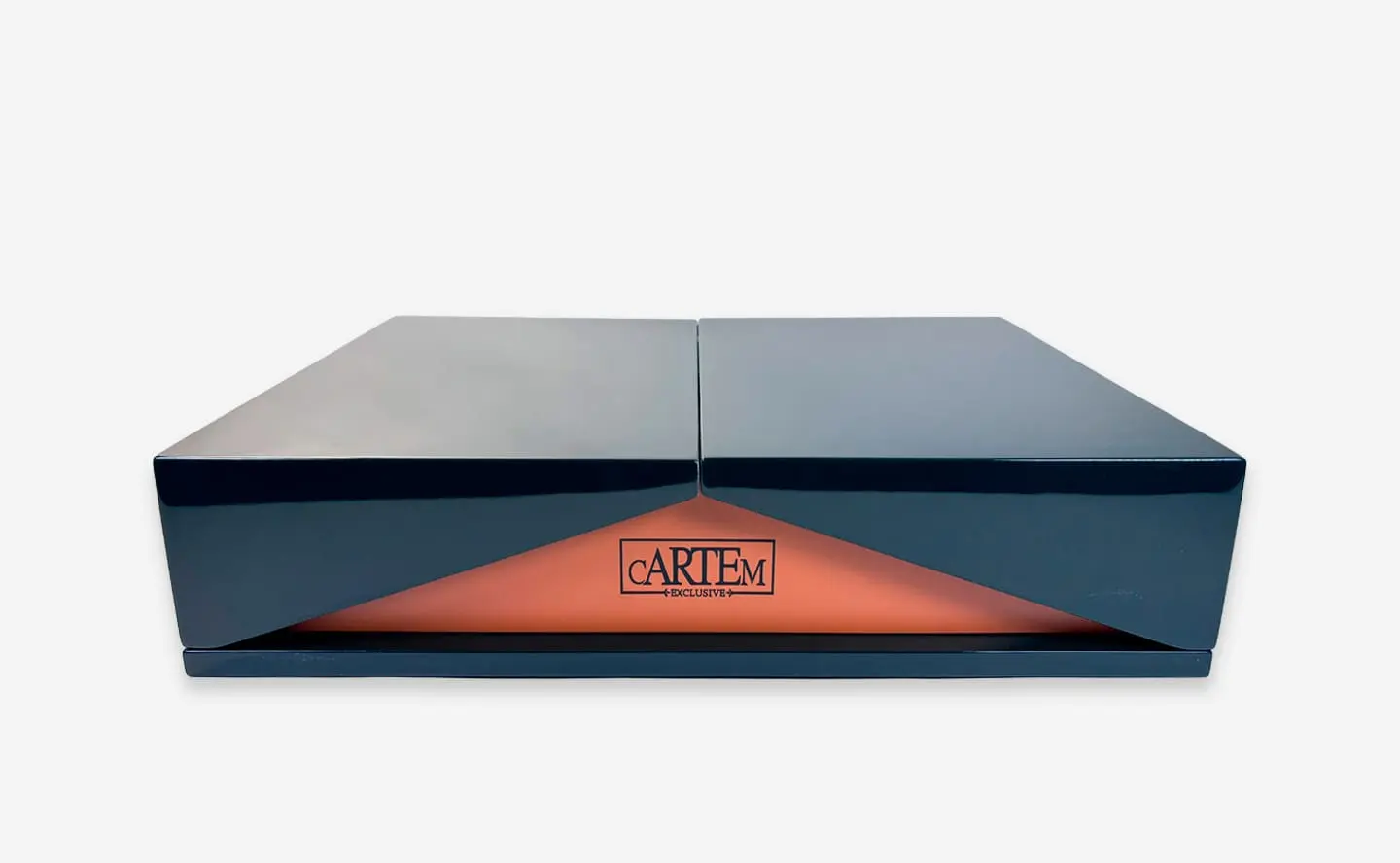
The cases have been handmade, with customized carpentry and painting, dark exterior and warm interior. solidly safeguard a bibliographic work of great historical value., providing a elegant and durable protection.
The luxury of exploring the mind of the Renaissance genius
The facsimile edition of the Madrid Codex I & II is not only a tribute to Leonardo da Vinci, but also to a celebration of the art of bookbinding.
At cARTEm, we have combined the best of modern technology with traditional techniques to offer to collectors and book lovers a unique and valuable piece. Acquiring these facsimiles is more than owning a book; it is owning a work of art., a window into the Renaissance and the brilliant mind of Leonardo Da Vinci.
Codex Madrid l & ll
Relevant data
The Codex Madrid I, catalogued as Ms. 8937 at the Biblioteca Nacional de España in Madrid, Spain, is known under the title «Treatise on Statics and Mechanics».». This coveted manuscript comprises a total of 192 pages, equivalent to 384 pages.
The Codex Madrid II, identified as Ms. 8936 at the Biblioteca Nacional de España in Madrid, Spain, is known as the «Treatise on fortification, statics and geometry».». This valuable manuscript is consisting of 158 pages, which is equivalent to a total of 316 pages.
See includes a detailed study by Elisa Ruiz, one of the greatest experts on the renaissance genius, that provides the translation and transcription of the original texts of Leonardo da Vinci.
The size of these books is a standard interior format of 21.5 x 14.5 cm (21.5 x 14.5 cm). This format provides a balance between manageability and readability.





 Español
  English
 Português
 Français