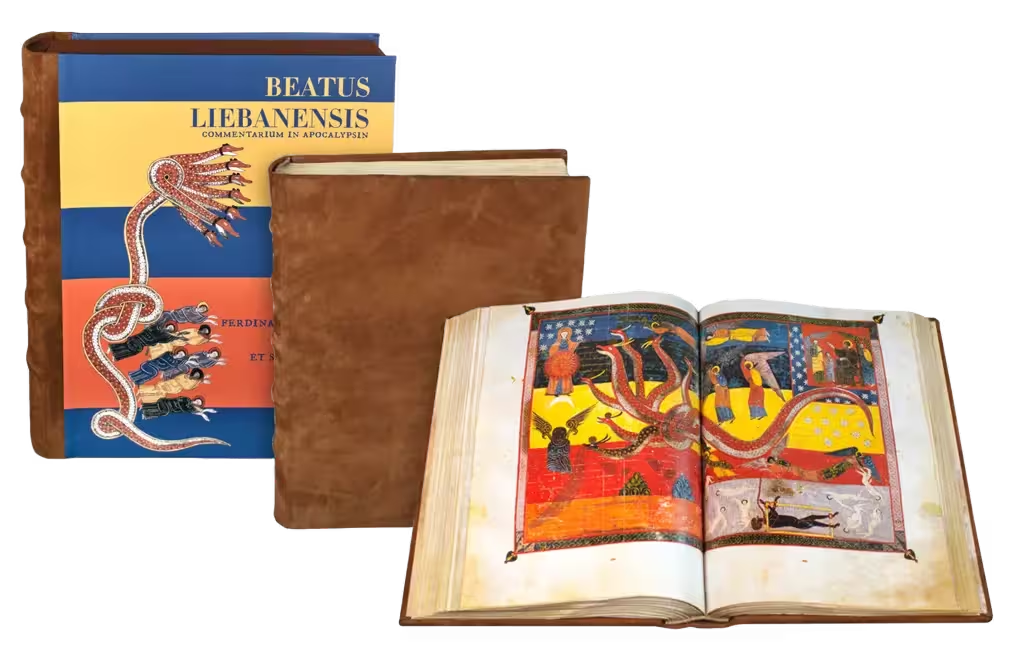
An exquisite and limited reproduction, handcrafted by master bookbinders for true connoisseurs of history.
One of the most important codices of the European Middle Ages.
It was commissioned in the 11th century by the illustrious kings Ferdinand I of León and Queen Sancha, and represents a legacy of incalculable cultural, religious and political value.
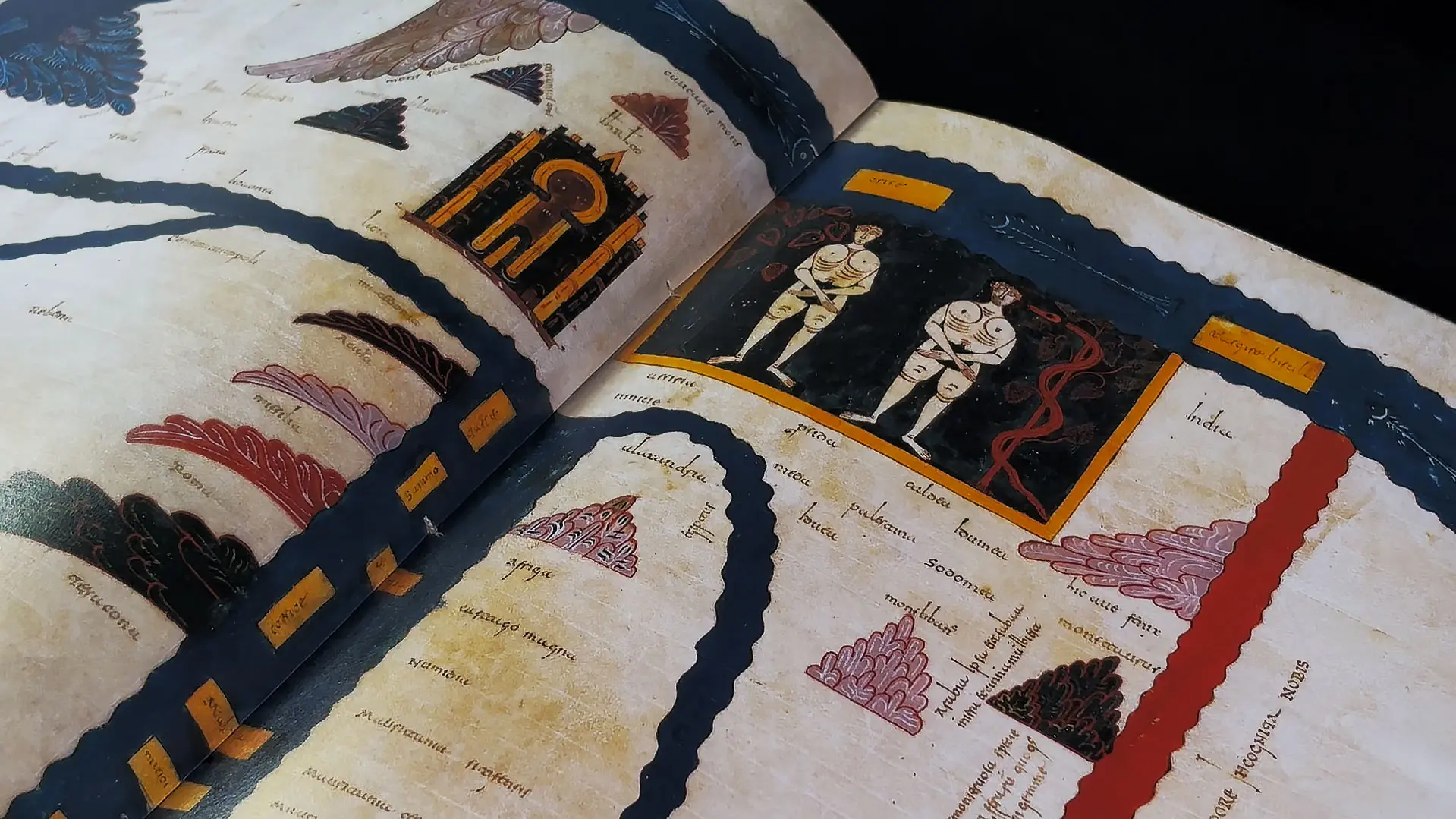
It is a priceless jewel that contains the «Commentary on Revelation».» of the illustrious monk of the 8th century, Beato de Liébana. Known for its deep devotion and vast knowledge, left a indelible mark on history. Copied in Leon around 1047, this Beatus is the first great illustrated Bible of the Peninsula, commissioned by the kings of the Ferdinand I of León and Queen Sancha.
With this masterpiece, the monarchs were not only seeking to strengthen their religious devotion, but also consolidate its power and prestige. Its royal commission in the 11th century and its preservation in the National Library make it the most important one of the most important codices of the European Middle Ages.
True-to-the-past binding
Handmade
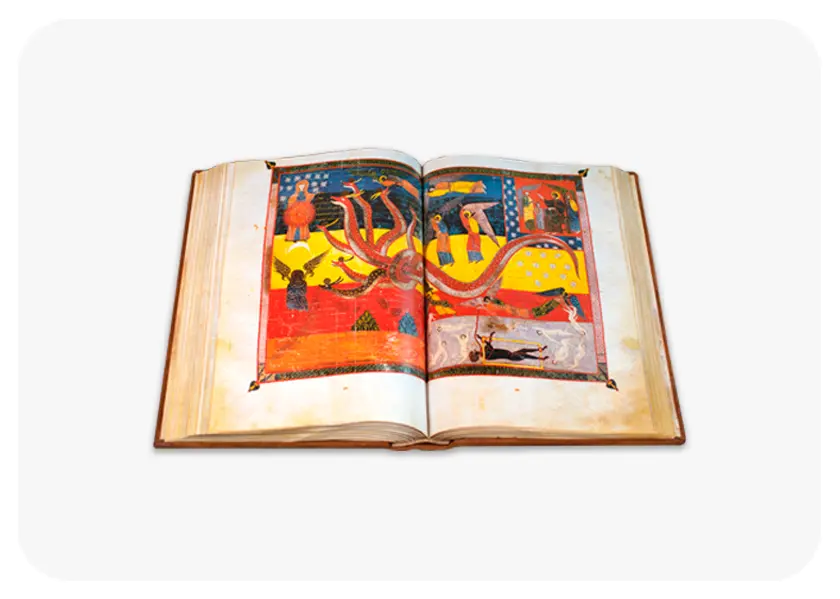
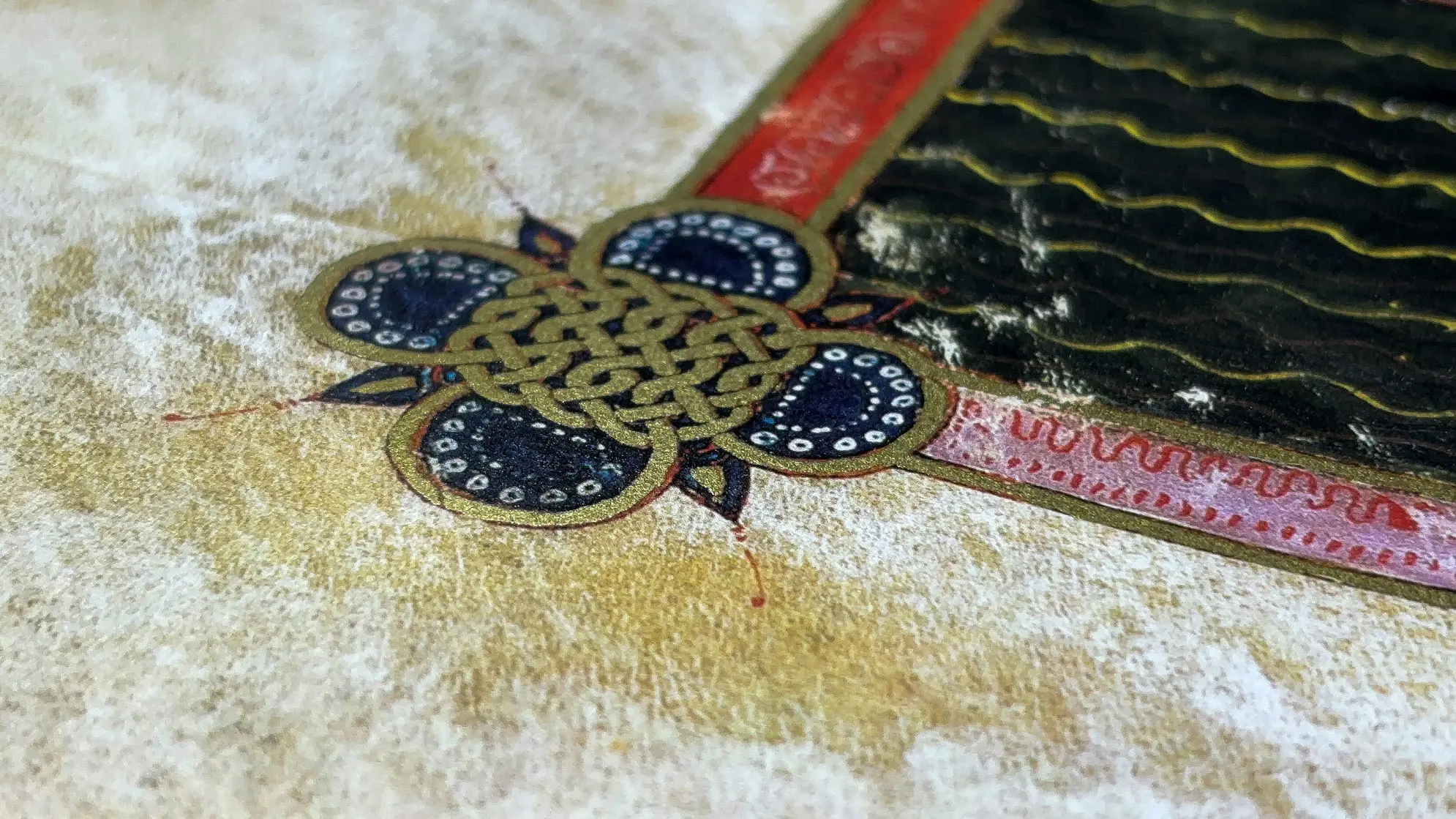
Each facsimile of the Beatus of Fernando I de León y Sancha, is produced following the same methods as in the 11th century. No shortcuts. No machines. Only expert hands and specially selected materials. The handmade process guarantees an accurate reproduction that ensures the authenticity and quality of the result in every detail, while preserving the rich heritage of past centuries..
Our handcrafted process is similar to the medieval loom technique, where each page is precisely woven on an exceptional material known as pergamenata stucco of 190 grams. This material was selected for its unique texture and unparalleled durability, features that ensure that every page is not only functional, but also a work of art in itself.
Our handcrafted process is similar to the medieval loom technique, where each page is precisely woven on an exceptional material known as pergamenata stucco of 190 grams. This material was selected for its unique texture and unparalleled durability, features that ensure that every page is not only functional, but also a work of art in itself.
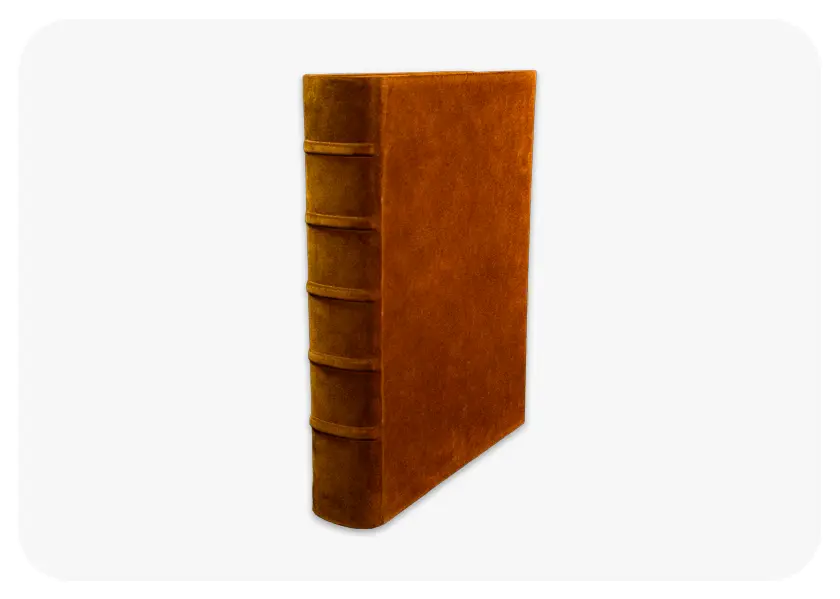
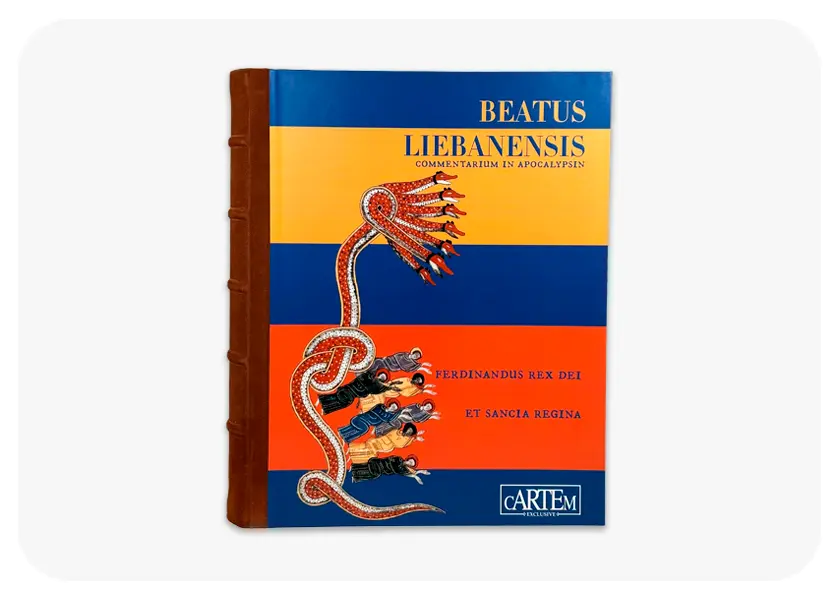
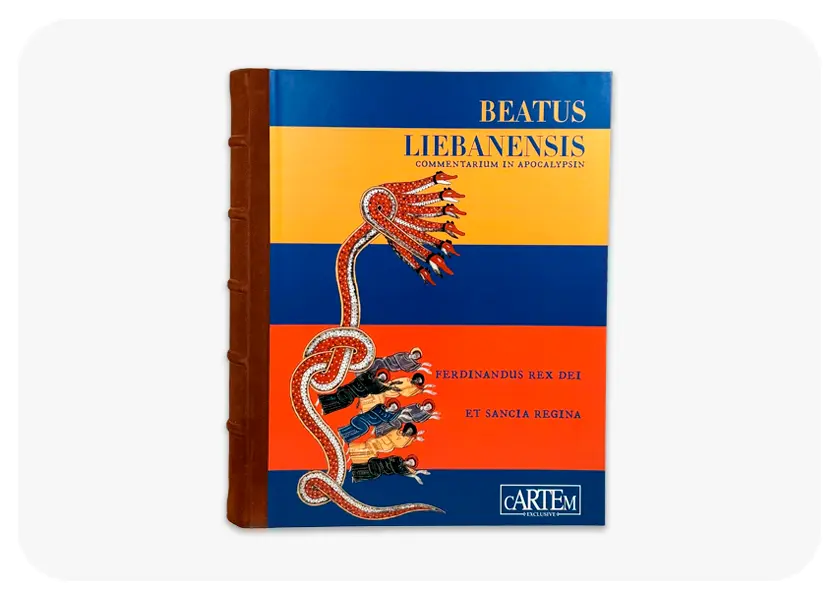
Front view case
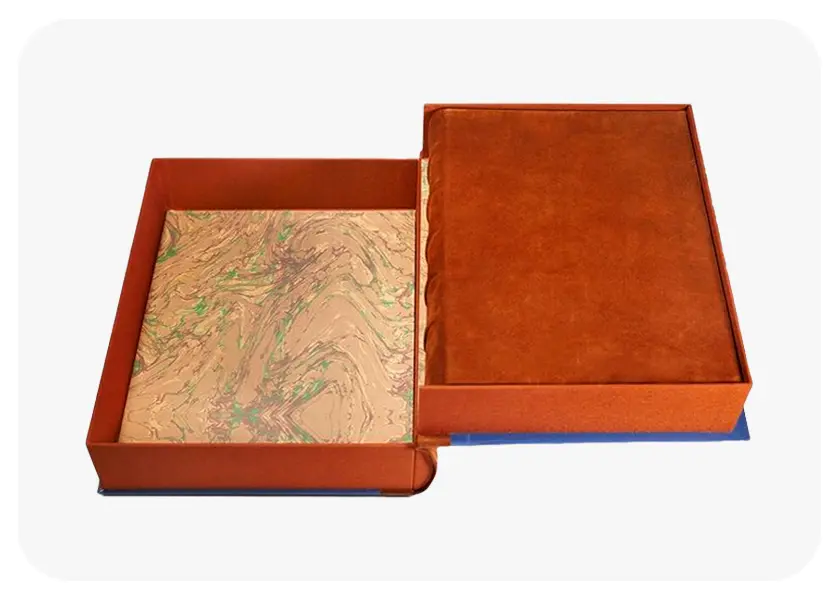
Case inside view
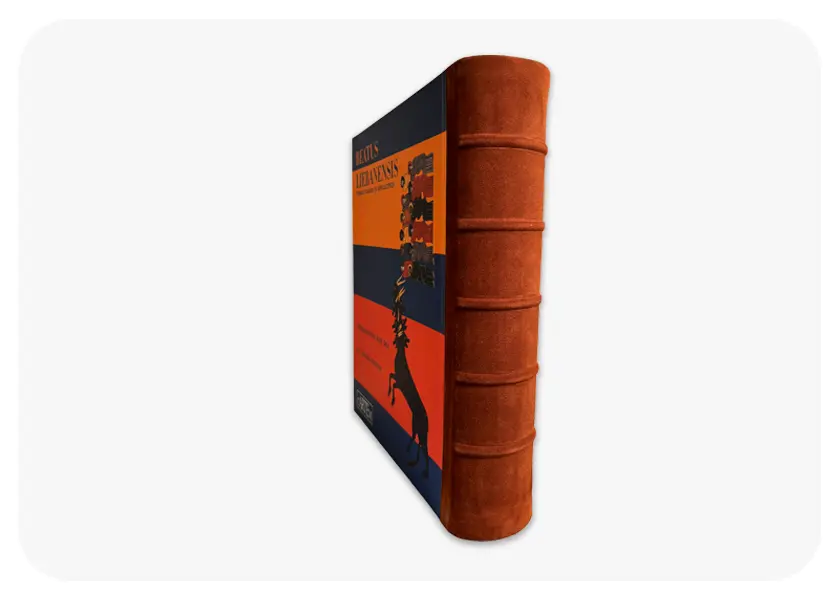
Case with leather spine
A unique jewel for collectors
Each copy offers the opportunity to own a piece of European cultural history. This luxurious facsimile edition not only preserves the magnificence of the original, but also ensures that its legacy will endure.
Our master craftsmen have rescued the essence of past eras, transforming it into a tangible work for those who value the timeless beauty and cultural legacy of great books.
The codex in popular culture
He appears in several literary, television and film productions, such as the movie «The Name of the Rose» (1986) by Umberto Eco., where Sean Connery and Christian Slater's characters look at an illuminated page of the Blessed.
Directors such as Ridley Scott in «Kingdom of Heaven» (2005) and the Amazon Prime series «El Cid» (2020) have used images of the Blessed. to recreate historical scenarios.
His miniatures have inspired artists such as Pablo Picasso in «Guernica» (1937) and Ingmar Bergman in «The Seventh Seal» (1957).). These uses in popular culture demonstrate the lasting fascination and influence of Beatus of Liébana on contemporary artistic and narrative creativity.
Still from «The Name of the Rose» (1986) showing an illuminated page of the Beatus of Ferdinand I and Doña Sancha.
Relevant data of this masterpiece
The manuscript has dimensions 36 x 26.8 cm, which is considerably large for the time and which is provides adequate space for writing the text and for creating thumbnails.
Consists of 640 pages (317 pages plus flyleaves). Parchment, made from animal skin, was common in medieval manuscripts because of its durability and quality. The guards, made of paper or simple parchment, protect the main folios.
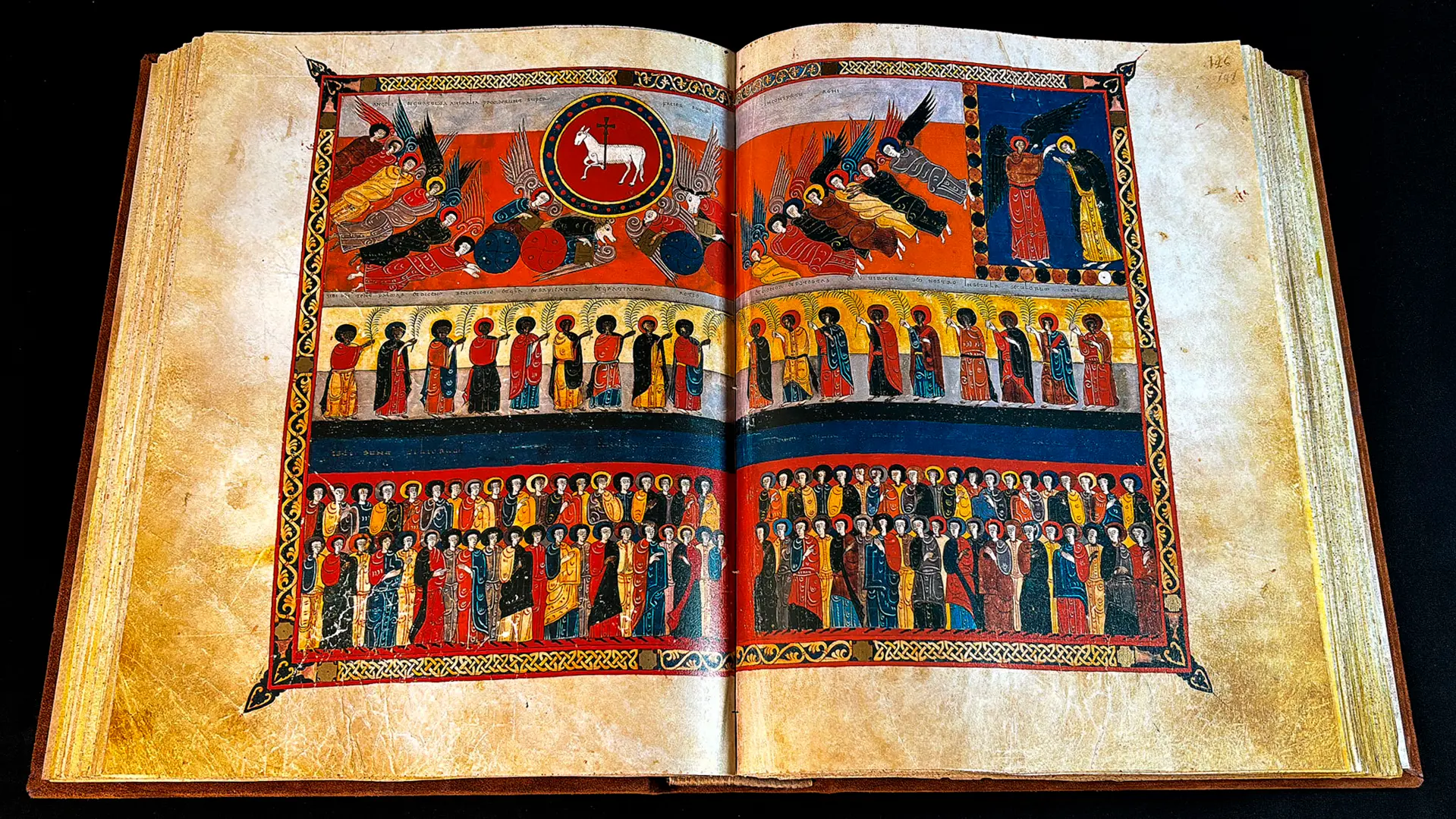
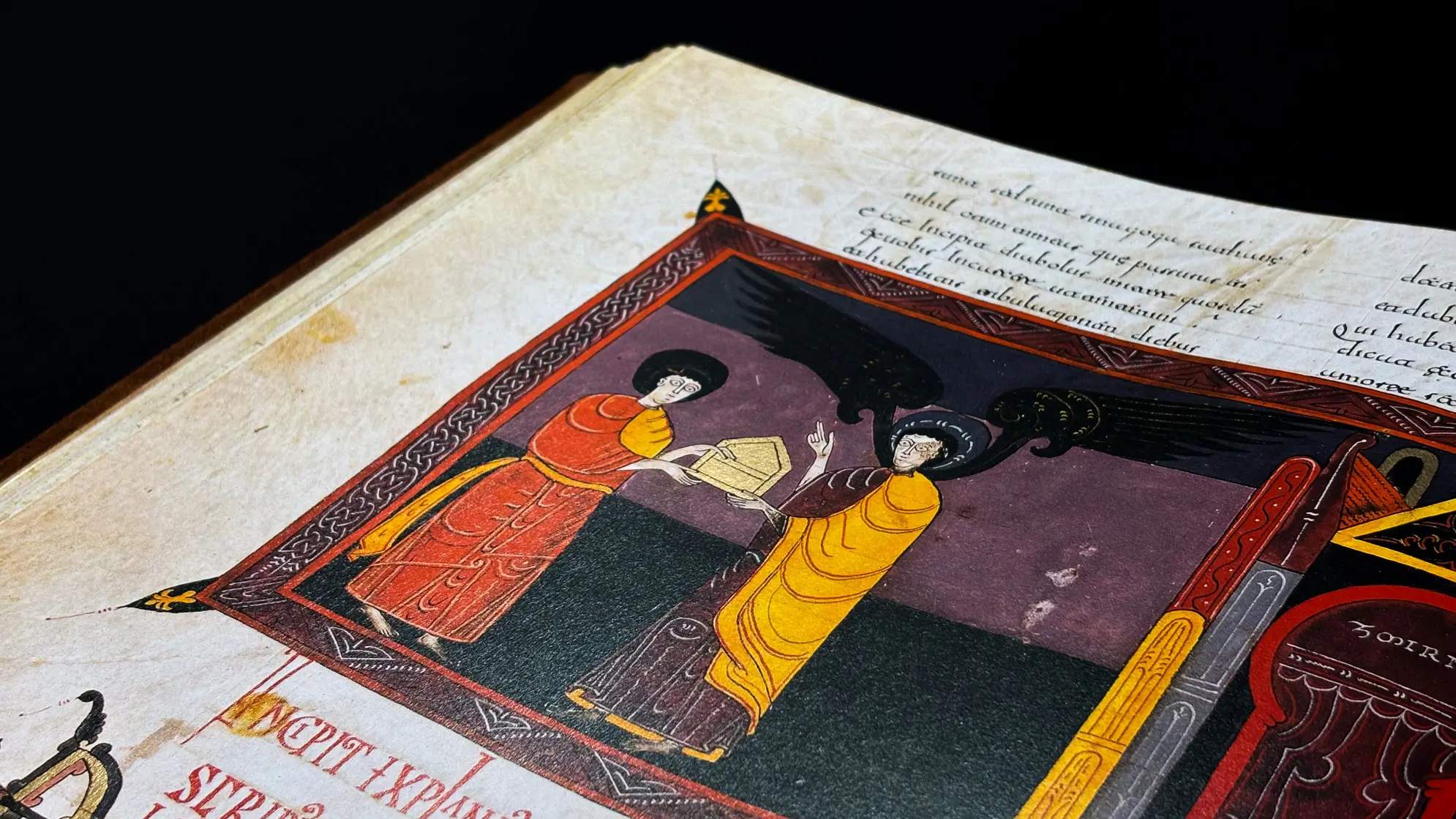
Presents 98 illustrations, of which 9 are double-page spreads, being the most outstanding and elaborated. Detailed and decorative miniatures that complement the text, religious, historical or literary scenes stand out..
There were 940 numbered copies certified by notarial act. This print run reflects the exclusivity of the manuscript, as well as its cultural and heritage value.
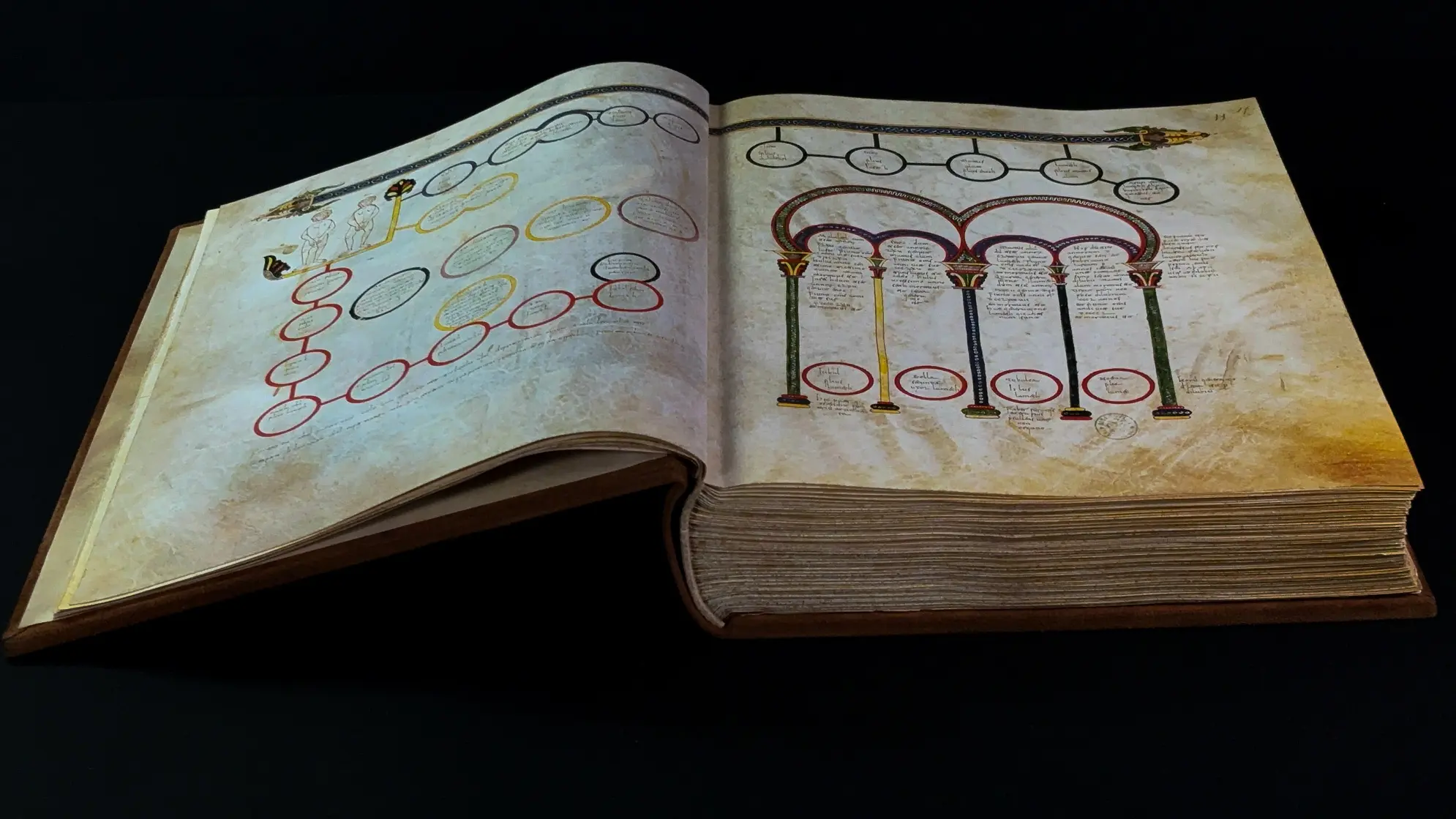
Includes two genealogical tables, which could be important royal or family lineages for the context of the manuscript and the The full text of Revelation is significant, as it is a book of the New Testament, which contains prophetic visions of the end of the world and the last judgment.
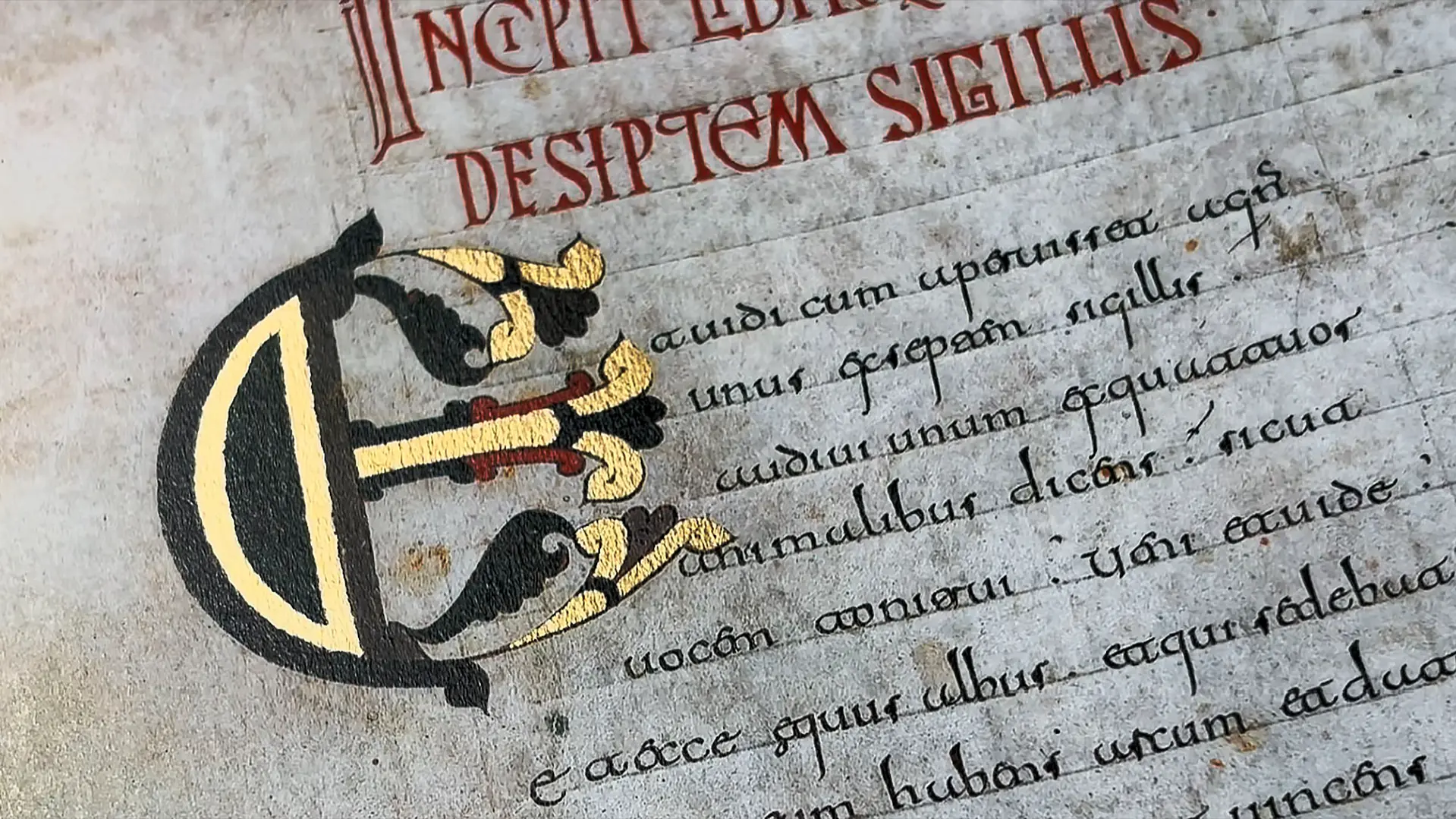
It is a source of academic knowledge, as it provides material for text analysis, paleography, comments on the content, etc. and detailed study of the miniatures.
The author is Facundo, he could have been a copyist, compiler or even illustrator.





 Español
  English
 Português
 Français