An exquisite and limited reproduction, handcrafted by master bookbinders for true connoisseurs of history.
Known for its rich iconography and its influence on Romanesque and later art.
An unparalleled work created in the 11th century in the monastery of Saint-Sever, located on the French Way of St. James. Commissioned by the abbot Grégoire de Montaner. It is the only one that exists outside Spain.
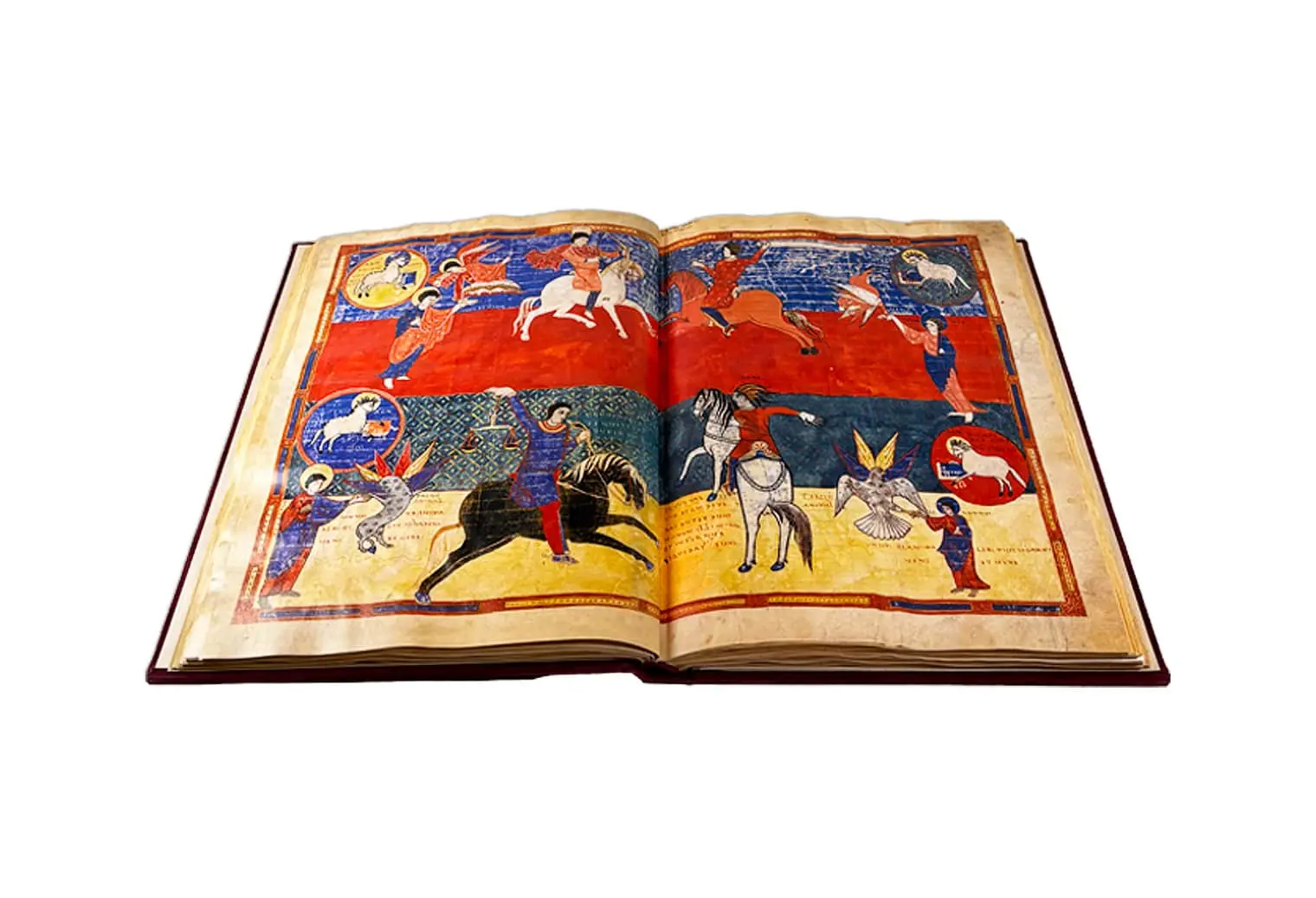
The Blessed of Saint-Sever is a 11th century illuminated manuscript, it is about a copy of Beato de Liébana's «Commentary on the Apocalypse»., developed in the Saint-Sever monastery, in the southwest of France. Throughout the centuries, this masterpiece has defied tumultuous periods of history, including the French Revolution, and has found its definitive home in the majestic National Library of France (BnF), where its splendor continues to astonish everyone. He is the only one among the Blessed with three different models for your illustrations, combining the iconography of the first edition with a model of the third pictorial redaction and possibly including motifs from a non-Hispanic illustrated Apocalypse.
The Blessed with the greatest artistic relevance
Although produced in France, it is believed that the principal copyist, Stephanus Garsia, was a Spaniard. the influence of the Hispanic tradition on the construction site. The manuscript has 108 miniatures, 84 of them are historical, and more than 1,400 colored initials, showing a French Romanesque style with Mozarabic and even Carolingian influences. The manuscript The use of colors that were uncommon at that time, such as pink, violet and blue-green, in addition to the basic colors, which will give you confers a high degree of originality.
True-to-the-past binding
Handmade
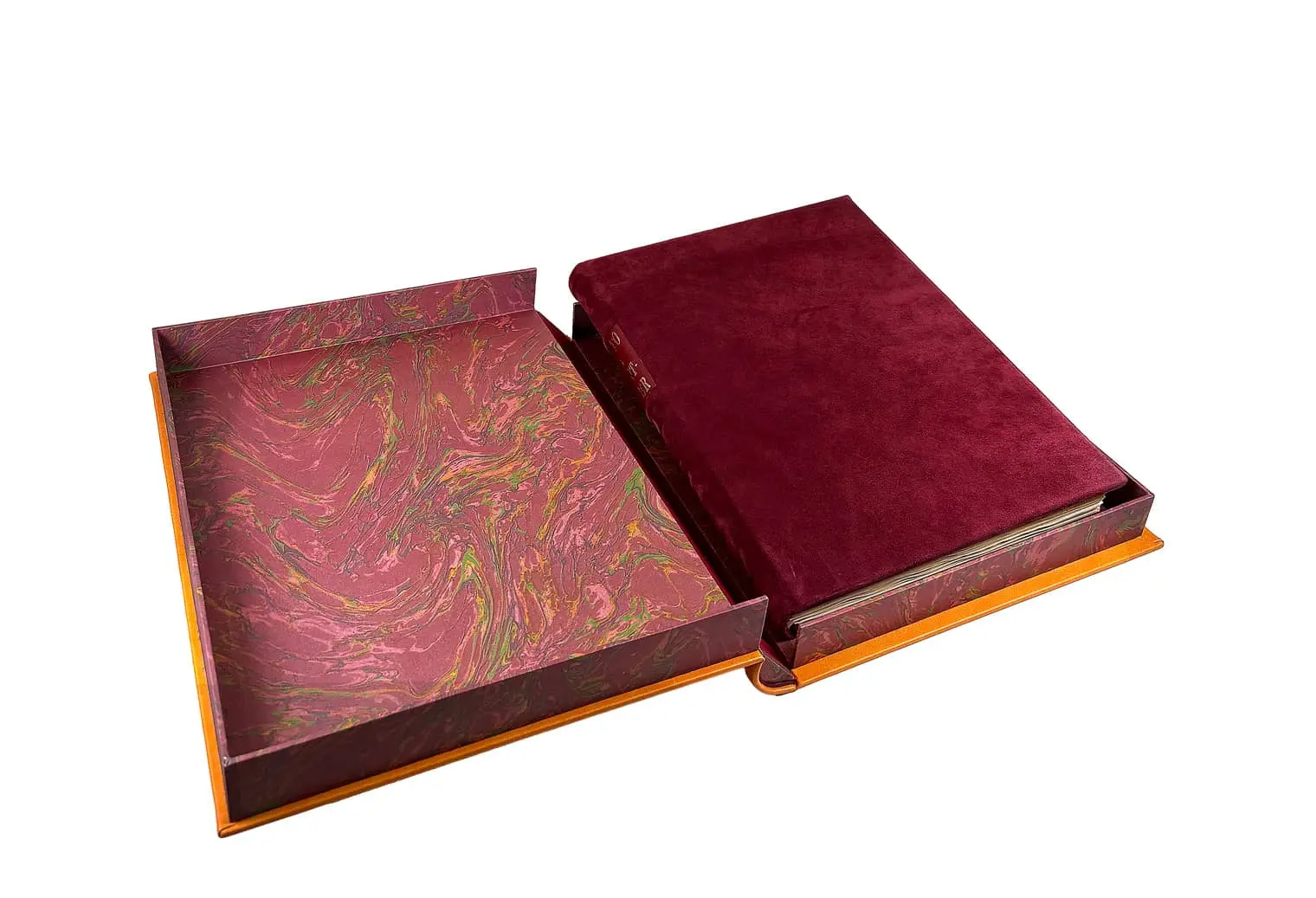
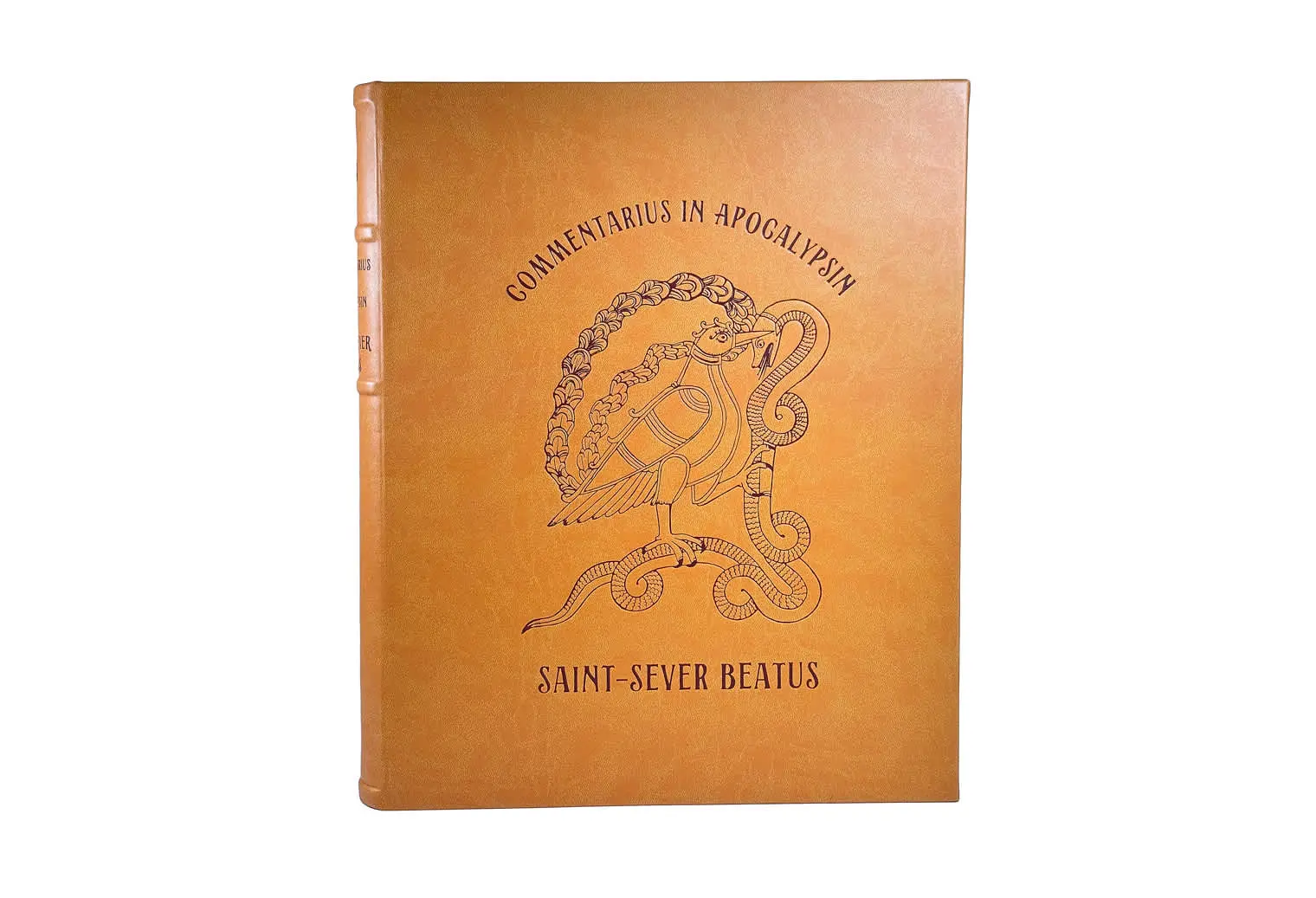
Each facsimile of the Blessed of Saint-Sever, has been made with traditional handmade bookbinding techniques, The product has been elaborated with precision to the detail.
This reproduction not only preserves the fidelity to the original, but also highlights its aesthetic value and durability. In this way, each copy becomes a work of art complete that capture and share the beauty and content accurately.
Luxury edition and historical value
Each copy offers the opportunity to own a piece of European cultural history. This luxurious facsimile edition not only preserves the magnificence of the original, but also ensures that its legacy will endure.
The manuscript that inspired Picasso and Matisse
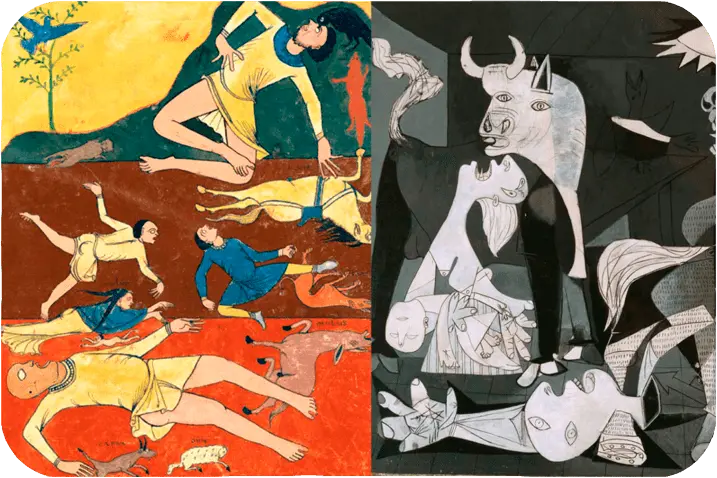
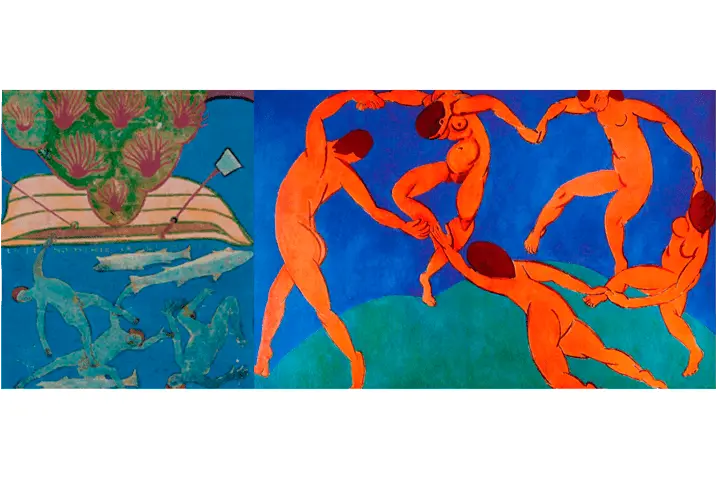
His color palette demonstrates unsurpassed artistic genius. The illustration «The Flood» inspired one of the greatest painters. of the twentieth century, Pablo Picasso, in his iconic work «Guernica». The influence of Blessed Saint-Sever is also reflected in another illustrious painter, Henri Matisse, who for his work «La Danza» found inspiration in the three drowned men that appear in «The Third Trumpet». These remarkable parallels highlight the influence of this medieval work on modern artistic creation. The ability of the manuscript to inspire two of the greatest artists of the twentieth century underscores its relevance in the history of art, transcending the frontiers of time and artistic style..
Detail of «The Flood» and «Guernica».»
Detail of «The Dance» and «The Third Trumpet».»
Relevant data of this masterpiece
The manuscript has the dimensions of 36.7 x 28.6 cm.
Contains a total of 102 illustrations, of which 5 are double-page spreads.
It was created in a scriptorium French around the years 1050-1070.
Created by Stephanus Garcia, a Spanish monk, copyist and illuminator, for Gregorio de Montaner, was abbot of the abbey from 1028 to 1072.
It is preserved in the National Library of France (BnF), under the reference Ms. Lat. 8878.



 Español
  English
 Português
 Français